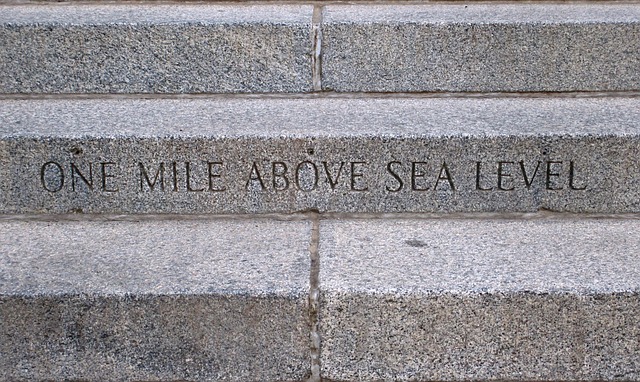
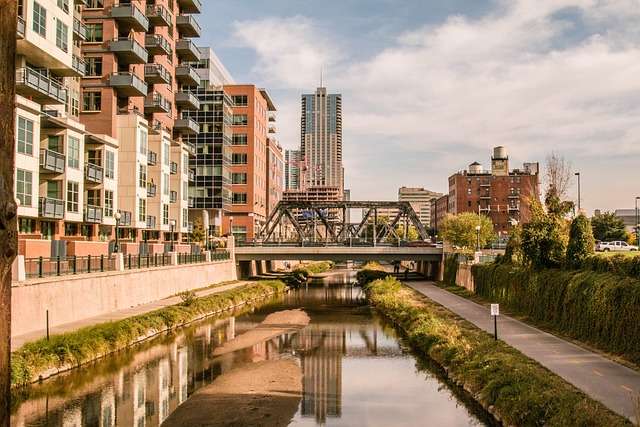
Baseball in Colorado runs through Denver and Coors Field, but the state’s baseball story is broader than the Rockies: old Mile High Stadium crowds, Pioneer League towns, college programs, high-school talent corridors, and famous Colorado-connected players all matter. Coors Field opened in 1995 in Denver’s Lower Downtown area and became one of baseball’s defining offensive parks, while Colorado’s minor-league map has recently shifted after the Grand Junction Jackalopes relocation, Northern Colorado Owlz collapse, and Rocky Mountain Vibes departure from Colorado Springs.
Baseball in Colorado is shaped by altitude, mountain geography, Denver’s major league identity, strong high school programs, college baseball, summer competition, and the state’s unusual place in the professional game. Colorado is not one of the oldest baseball centers in the United States, and it does not have the same deep nineteenth-century professional history as New York, Pennsylvania, Ohio, Illinois, or Massachusetts. But since the arrival of the Colorado Rockies in 1993, the state has become one of the most recognizable baseball markets in the Mountain West.
Colorado baseball is also different because of where it is played. The state’s climate, elevation, and geography affect everything from the way the ball carries at Coors Field to the way youth and college players train through changing weather. Baseball in Colorado is not just Denver and the Rockies, though. It also includes high school baseball along the Front Range, college programs across the state, former minor league cities, summer baseball in mountain and western communities, and a growing player-development scene that connects Colorado athletes to college baseball, professional baseball, and national recruiting circuits.
Baseball History in Colorado
Colorado’s baseball history began long before Major League Baseball arrived in Denver. Like much of the American West, the state developed baseball through town teams, amateur clubs, industrial teams, military communities, school programs, and minor league baseball. The sport grew alongside Colorado’s cities, rail connections, mining towns, and expanding population. Baseball was part of summer life in Denver, Pueblo, Colorado Springs, Grand Junction, and other communities before the state had a major league team.
Denver was the historic center of Colorado professional baseball. The city’s long minor league history helped establish it as a viable baseball market before MLB expansion. The Denver Bears, later the Denver Zephyrs, gave the city a professional baseball identity for decades. These teams connected Colorado fans to affiliated baseball and helped prove that Denver could support higher-level baseball.
The biggest shift came when the Colorado Rockies joined Major League Baseball as a National League expansion team in 1993. The Rockies first played at Mile High Stadium, where they drew massive crowds and quickly showed that Denver had major league baseball demand. In 1995, the team moved into Coors Field in Lower Downtown Denver. Coors Field opened on April 26, 1995, with Dante Bichette hitting a walk-off home run in the first official game at the park. (mlb.com)
Coors Field immediately became one of baseball’s most famous ballparks because of its location, design, and offensive environment. The stadium sits in Denver’s LoDo district and became part of downtown Denver’s wider redevelopment story. It also became known for high-scoring games, long home runs, and the challenges pitchers face at altitude. MLB’s official Rockies ballpark history notes that in 1999, Coors Field saw 303 total home runs by the Rockies and their opponents, the most ever at one venue in a single season. (mlb.com)
The Rockies’ 2007 season remains the defining team moment in Colorado baseball history. That year, Colorado made a late-season surge, won the National League pennant, and reached the World Series. Even though the Rockies were swept by the Boston Red Sox, the “Rocktober” run gave the state its most memorable baseball month and proved that Colorado could become a full postseason baseball market.
Professional Baseball Teams and Ballparks in Colorado
Professional baseball in Colorado is centered on the Colorado Rockies and Coors Field. The Rockies are the state’s only Major League Baseball team and the franchise that defines Colorado baseball nationally. Since joining MLB in 1993, the Rockies have built their identity around Denver, the Mountain West, and one of the sport’s most distinctive home environments.
Coors Field is central to that identity. Opened in 1995, the ballpark is located in Denver’s Lower Downtown neighborhood near Union Station. It is one of MLB’s most recognizable stadiums, both because of its downtown setting and because altitude makes it a unique playing environment. The ball carries differently in Denver, breaking balls can behave differently, and pitching strategy has often been a major challenge for the Rockies. That makes Colorado baseball unusually connected to ballpark context. Few teams are discussed as often through the conditions of their home stadium.
The Rockies have had several major franchise figures, including Todd Helton, Larry Walker, Dante Bichette, Vinny Castilla, Andrés Galarraga, Troy Tulowitzki, Matt Holliday, Ubaldo Jiménez, Nolan Arenado, Charlie Blackmon, and others. Walker and Helton are especially important to Rockies history because both became Hall of Famers after careers strongly associated with Colorado. Walker, a Canadian star, became one of the franchise’s first great players, while Helton became the long-term face of the team.
Colorado has also had a wider professional baseball map beyond MLB. Colorado Springs, Grand Junction, Pueblo, and other cities have hosted professional or high-level summer baseball over time. The Pioneer League has been especially important in the Mountain West. Since 2021, the Pioneer League has operated as an MLB Partner League, with teams across Montana, Idaho, Utah, and Colorado. The league’s own history notes Colorado Springs and Grand Junction as part of its post-affiliation footprint. (milb.com)
That professional map has shifted, however. The Rocky Mountain Vibes, based in Colorado Springs, announced in 2025 that they would no longer play in Colorado Springs, a move Colorado Public Radio reported would leave the state without any minor league baseball teams. (cpr.org) The Northern Colorado Owlz also had a short and unstable run in Windsor after relocating from Orem, Utah; the Pioneer League had announced the Owlz as a Colorado addition for the 2022 season. (milb.com)
That leaves Colorado with a strange professional baseball profile: a strong MLB presence in Denver, but a thinner minor league footprint than many other baseball states. For fans outside the Denver metro area, that can make local baseball more dependent on college programs, high school baseball, summer leagues, and trips to Coors Field.
College, University, and School Baseball in Colorado
College and school baseball are essential to Colorado’s baseball ecosystem. The state does not have the same year-round outdoor baseball environment as California, Florida, Texas, Arizona, or Georgia, but it has a strong development culture along the Front Range and in western Colorado. Players often deal with short springs, cold weather, snow interruptions, and indoor training needs, but Colorado still produces college recruits and professional prospects.
At the NCAA Division I level, Colorado baseball is led by the Air Force Academy and the University of Northern Colorado. Air Force baseball gives the state a Mountain West presence and a unique military-academy identity. Northern Colorado has also been part of the state’s Division I baseball picture, giving Colorado another route into national college baseball competition. FieldLevel lists Air Force and Northern Colorado as Colorado’s NCAA Division I baseball programs. (fieldlevel.com)
Colorado Mesa University in Grand Junction is one of the most important college baseball programs in the state. The Mavericks have been a strong NCAA Division II program and have helped make western Colorado an important part of the state’s baseball map. Colorado also has other college baseball programs across NCAA Division II, Division III, junior college, and NAIA settings, giving players multiple levels of opportunity. SportsRecruits lists 15 college men’s baseball programs in Colorado, showing that the state’s college baseball footprint is broader than only Division I. (sportsrecruits.com)
High school baseball is another major part of Colorado’s development structure. The state has programs across the Denver metro area, Colorado Springs, Fort Collins, Boulder, Pueblo, Grand Junction, the mountain communities, and the eastern plains. MaxPreps lists high school baseball teams across Colorado, reflecting the sport’s statewide scholastic presence. (maxpreps.com)
Colorado high school players often face a different development challenge than players in warmer states. The outdoor season can be compressed, and weather can affect practice schedules. As a result, indoor facilities, club teams, summer baseball, strength training, and travel tournaments become important. Many Colorado players use summer and fall baseball to gain exposure beyond the state, especially if they want to reach higher-level college programs.
The state’s baseball development is also shaped by altitude. Players who grow up hitting in Colorado may play in environments where the ball carries well, but they also have to adjust when they compete at lower elevations. Pitchers face their own developmental questions because breaking-ball movement, conditioning, and command can be affected by elevation. That does not prevent Colorado from producing talent, but it gives the state a distinctive baseball environment.
Baseball Players from Colorado
Colorado has produced a smaller number of Major League Baseball players than traditional talent-heavy states like California, Texas, Florida, Georgia, or North Carolina, but it has still contributed notable players to the professional game. Baseball-Reference maintains a list of MLB players born in Colorado, which includes both historic and modern major leaguers. (baseball-reference.com)
One of the better-known Colorado-born players is Chase Headley, who was born in Fountain, Colorado. Headley became a standout major league third baseman, especially with the San Diego Padres. His 2012 season was his peak: he led the National League in RBIs, won both a Gold Glove and Silver Slugger, and finished fifth in National League MVP voting. (pinstripealley.com)
Colorado’s baseball identity also includes players who were not born in the state but became deeply associated with the Rockies. Todd Helton, Larry Walker, Nolan Arenado, Troy Tulowitzki, Charlie Blackmon, Matt Holliday, Vinny Castilla, Andrés Galarraga, and Ubaldo Jiménez are all central to the state’s MLB memory because of what they did in Denver. That distinction matters: “players from Colorado” is not the same thing as “players important to Colorado baseball.”
Larry Walker is a good example. He was born in British Columbia, Canada, but became one of the greatest players in Rockies history. His Hall of Fame career is tied closely to his years in Colorado, where he won the 1997 National League MVP Award and became one of the best all-around players of his era. Todd Helton, born in Tennessee, became even more closely associated with the Rockies as the franchise’s longtime first baseman and one of the most beloved athletes in Colorado sports history.
For homegrown Colorado players, the pathway often runs through high school baseball, travel baseball, college recruiting, and out-of-state exposure. Some players stay in Colorado for college. Others leave for larger baseball conferences or warmer-weather programs. Because Colorado is not as heavily scouted as the largest baseball states, players often need strong summer performances, showcase exposure, and college development to reach professional baseball.
Colorado’s baseball player story should therefore be told in two layers. One layer is the players born or developed in Colorado. The other is the players who became Colorado baseball figures through the Rockies. Both matter, but they tell different stories.
Baseball Culture and Regional Identity in Colorado
Baseball culture in Colorado is built around Denver, Coors Field, the Rockies, the Front Range, and the state’s outdoor summer identity. The Rockies are the central baseball brand, and their presence gives Colorado a direct connection to Major League Baseball. Even when the team struggles, Coors Field remains one of the most popular summer destinations in Denver.
The ballpark is part of Colorado baseball culture in a way that goes beyond wins and losses. Coors Field’s location in LoDo makes it a social anchor as much as a sports venue. Fans attend games for the baseball, the downtown atmosphere, the mountain views, the summer evenings, and the unique offensive environment. In many ways, the stadium has helped keep baseball visible in Colorado even during seasons when the Rockies have not been competitive.
Colorado’s fan geography is also interesting. The Rockies are the only MLB team in the Mountain Time Zone between the Midwest and the West Coast markets, which gives them a wide regional reach across parts of the Mountain West. Fans from Wyoming, New Mexico, Montana, Utah, Nebraska, and western Kansas may have some connection to the Rockies, even if local loyalties vary. Denver functions as a regional baseball capital.
At the youth level, baseball culture is strongest along the Front Range, where population density, facilities, schools, and club programs support participation. Denver suburbs, Colorado Springs, Fort Collins, Boulder, and surrounding communities provide much of the state’s youth baseball energy. Western Colorado, especially Grand Junction, also has an important baseball identity because of Colorado Mesa and the area’s warmer, drier climate.
Baseball in Colorado competes with many other sports. Football is massive through the Denver Broncos and college programs. Basketball has grown through the Denver Nuggets. Hockey has the Colorado Avalanche and strong youth participation. Soccer, lacrosse, skiing, snowboarding, cycling, running, and outdoor recreation all compete for athletes and attention. That makes baseball’s place in Colorado more seasonal and more community-driven than in some traditional baseball states.
Still, Colorado has a clear baseball identity. It is a major league state, a mountain-state baseball market, a high-altitude baseball laboratory, and a developing player pipeline with strong school and college components.
The Future of Baseball in Colorado
The future of baseball in Colorado depends on three main forces: the Rockies’ long-term competitiveness, the strength of youth and college development, and the state’s ability to rebuild or maintain baseball opportunities outside Denver. Coors Field gives Colorado a permanent major league anchor, but the thinner minor league footprint makes the rest of the baseball ecosystem especially important.
For players, Colorado’s future will depend on better access to indoor facilities, quality coaching, summer competition, and recruiting exposure. The state can produce strong athletes, but baseball development requires repetition, game experience, and visibility. College programs such as Air Force, Northern Colorado, Colorado Mesa, and others will continue to matter because they give in-state players meaningful paths beyond high school.
For fans, the Rockies remain the key. A competitive Rockies team can lift baseball interest across the state, while losing seasons can make baseball feel more like a ballpark tradition than a serious contender’s culture. But Colorado’s baseball foundation is stronger than one team’s record. The state has MLB history, a famous ballpark, youth participation, college programs, and a regional identity unlike any other baseball market in the country.
Baseball in Colorado is not traditional East Coast baseball, Southern college baseball, or West Coast year-round baseball. It is mountain baseball: altitude, summer nights, downtown Denver, compressed seasons, resilient player development, and a sport that has carved out its own place in one of America’s most distinctive sports states.