
Memphis baseball is one of the more layered professional baseball stories in the American South. The city has never had a Major League Baseball franchise, but it has been a serious baseball city for more than a century through the Southern Association, Negro leagues, Double-A baseball, Triple-A baseball, and one of the best-known modern minor league parks in the country. Its professional baseball history runs through the Memphis Egyptians, Memphis Turtles, Memphis Chickasaws, Memphis Red Sox, Memphis Blues, Memphis Chicks, and Memphis Redbirds.
That history gives Memphis a different baseball identity from cities defined by one permanent MLB club. Memphis baseball is a story of continuity through change. Teams have folded, moved, rebranded, changed leagues, changed affiliations, and moved ballparks, but professional baseball has kept returning to the city. The result is a baseball culture that sits between Southern League tradition, Black baseball history, St. Louis Cardinals development, downtown entertainment, and the long memory of minor league baseball as civic infrastructure.
Early Professional Baseball in Memphis
Professional baseball in Memphis became firmly established in the early twentieth century through the Southern Association, one of the most important minor leagues in the South. The city’s first long-running Southern Association club began play in 1901 as the Memphis Egyptians. The team later became the Memphis Turtles from 1909 to 1911 before adopting the Memphis Chickasaws name in 1912. The Chickasaws, often shortened to the Chicks, became the city’s best-known white minor league team during the first half of the twentieth century.
The Southern Association was central to baseball in the segregated South. It included cities such as Atlanta, Birmingham, Chattanooga, Little Rock, Mobile, Nashville, New Orleans, and Memphis at different points in its history. For Memphis, the league gave the city a regular place in the regional baseball map. The Chicks were not a temporary team passing through town; they became part of the city’s sports identity across decades.
The Memphis Chickasaws won Southern Association pennants in 1921, 1924, 1930, 1933, 1953, and 1955, with the earlier Memphis Egyptians also winning pennants in 1903 and 1904. The club also won the 1952 Dixie Series, defeating the Shreveport Sports after losing earlier Dixie Series matchups to Fort Worth.
The Chicks’ long home was Russwood Park, one of the most important baseball sites in Memphis history. Russwood hosted regular minor league baseball, major league exhibitions, and major moments in the city’s sports life. It also became a symbol of how fragile the city’s baseball infrastructure could be. In 1960, Russwood Park was destroyed by fire after an exhibition game between the Chicago White Sox and Cleveland Indians. The Chicks finished the season in temporary facilities, but the loss of the ballpark helped end the franchise’s run in Memphis.
That fire marked more than the destruction of a stadium. It ended one of the longest chapters in Memphis professional baseball. The Southern Association itself folded after the 1961 season, making the end of the Chicks part of a larger collapse of the old Southern minor league order.
The Memphis Red Sox and Negro League Baseball
No serious history of Memphis baseball can treat the Chicks as the whole story. Memphis was also an important Negro leagues city, most notably through the Memphis Red Sox. The Red Sox were active for decades and became one of the city’s most important Black sports institutions during segregation.
The Memphis Red Sox were connected to earlier Black baseball organizations in the city, including teams associated with Arthur P. Martin, a Memphis barber and businessman. The team later came under the ownership of the Martin brothers, who were Black physicians and businessmen. That ownership structure is one of the most important parts of the Red Sox story because it placed the team inside Memphis’s Black professional and civic life, not just its sports history.
The Red Sox played in several Negro league structures over the years, including the Negro Southern League, the first Negro National League, and eventually the Negro American League. In 1937, the Memphis Red Sox were one of the eight founding members of the Negro American League. MLB’s history section notes that the club then came close to a major league title in 1938 after winning the Negro American League’s first-half championship with a 21–4 record.
The Red Sox matter because they show that Memphis had parallel baseball traditions during the Jim Crow era. White fans and Black fans often moved through different baseball institutions, different ballparks, different newspapers, and different economic networks. The Memphis Chicks were part of the Southern Association’s segregated professional system. The Memphis Red Sox were part of Black baseball’s professional world, where teams had to survive through travel, entrepreneurship, community backing, and uneven league structures.
Martin Stadium was especially important to the Red Sox. The club’s ballpark gave Black Memphis a baseball home at a time when public life was segregated. In that sense, the Red Sox were not just a team. They were a civic institution, an entertainment business, a community gathering point, and a visible symbol of Black ownership in professional sport.
The Red Sox also connect Memphis baseball to the broader Negro leagues map. Cities such as Kansas City, Chicago, Birmingham, Indianapolis, Pittsburgh, Newark, and Memphis all played roles in Black baseball’s professional ecosystem. Memphis’s place in that world deserves to sit beside its Southern Association history, not underneath it.
From the Blues to the Reborn Chicks
After the old Chickasaws era ended, Memphis did not immediately settle into a stable new baseball identity. The city returned to professional baseball in 1968 with the Memphis Blues, a Double-A team in the Texas League. The Blues used the ballpark that later became known as Tim McCarver Stadium. The team gave Memphis a return to affiliated professional baseball, but it did not become a permanent anchor in the way the old Chicks had been.
The next major chapter came in 1978, when the Memphis Chicks name returned. This second Chicks era lasted from 1978 through 1997 and gave the city two decades of Double-A baseball. The revived Chicks played at Tim McCarver Stadium and became a familiar part of the Memphis sports landscape. Contemporary retrospectives describe the team as a popular Double-A presence in southwestern Tennessee, especially after the earlier Memphis Blues had left town and Memphis had briefly been without professional baseball.
The revived Chicks were not the same franchise as the old Southern Association Chickasaws, but the name carried memory. It tied the city’s modern minor league baseball to the long pre-1960 tradition, even as the business and league structures had changed. In minor league baseball, names often carry civic meaning. “Chicks” gave Memphis a bridge between nostalgia and modern affiliated baseball.
This period also reflected the changing nature of minor league baseball. By the late twentieth century, minor league teams were increasingly tied to player development systems for MLB clubs. Cities like Memphis were no longer just independent regional baseball markets; they were also places where major league organizations could develop prospects, rehabilitate players, and build fan bases around affiliated talent.
The Double-A Chicks eventually gave way to something more ambitious: Triple-A baseball. That move changed Memphis’s place in the professional baseball hierarchy. Instead of being a mid-level affiliate, the city would become one step below the major leagues.
The Arrival of the Memphis Redbirds
The Memphis Redbirds were established in 1998 as a Triple-A expansion team in the Pacific Coast League. From the beginning, the Redbirds were tied to the St. Louis Cardinals as the Cardinals’ top minor league affiliate. The team name, colors, and identity were directly connected to St. Louis, which made sense in a city where Cardinals fandom had long been regionally relevant.
The Redbirds first played at Tim McCarver Stadium in 1998 and 1999 while AutoZone Park was being built downtown. That transition is important because it moved Memphis baseball from an older minor league facility into a modern downtown ballpark designed to be a civic and entertainment centerpiece.
AutoZone Park opened in 2000 and became one of the defining pieces of modern Memphis baseball. The ballpark was built downtown and gave the Redbirds a home that felt larger than a conventional minor league venue. It was originally built with a major-league-style ambition, and the first game at the park was an exhibition between the St. Louis Cardinals and the Memphis Redbirds.
The Redbirds quickly became successful on the field. As the Cardinals’ top affiliate, Memphis won Pacific Coast League titles in 2000, 2009, 2017, and 2018. The club also won the Triple-A National Championship in 2018. The Redbirds’ official affiliation history notes that more than 11 million fans have watched future major leaguers such as Albert Pujols, Yadier Molina, Jack Flaherty, and many others at AutoZone Park.
That player-development role is essential to the Redbirds’ identity. Memphis is not just a local minor league team; it is the final step before St. Louis for many Cardinals prospects. Fans in Memphis have often seen future major leaguers before they became major league regulars. That gives the city a direct connection to MLB without having an MLB franchise of its own.
AutoZone Park and Downtown Baseball
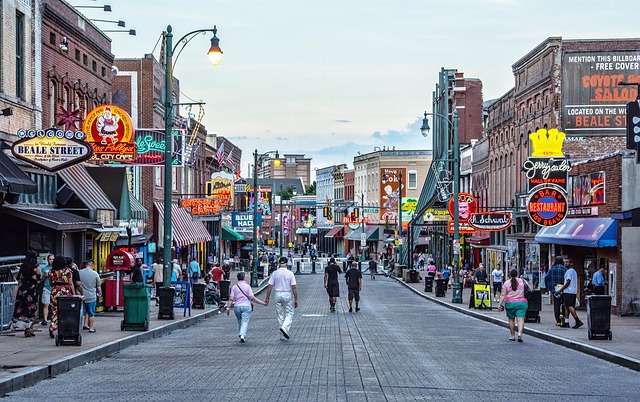
AutoZone Park changed how Memphis baseball fit into the city. Older minor league parks were often neighborhood or fairground-style facilities. AutoZone Park placed baseball directly in the downtown entertainment district, close to Beale Street, hotels, restaurants, offices, and civic landmarks. That location turned Redbirds games into part of a broader downtown experience.
The park also helped Memphis participate in a larger trend in minor league baseball: the downtown ballpark as urban redevelopment tool. Across the United States, cities used new minor league stadiums to bring activity into downtown districts, attract families and visitors, and build evening entertainment around sports. AutoZone Park fit that model, but with a particularly ambitious scale when it opened.
The ballpark has evolved over time. It originally had a larger seating capacity, then underwent renovations that reduced fixed seating and added more flexible fan amenities. The current park is less about simply filling a large grandstand and more about offering varied ways to watch a game.
This matters because minor league baseball has changed. The product is not only the game on the field. It is also the ballpark experience, promotions, food, family entertainment, group outings, and civic atmosphere. Memphis baseball has had to adapt to that reality, just as teams across the minor leagues have.
AutoZone Park has also carried Memphis baseball through periods of financial and ownership change. In 2014, the St. Louis Cardinals purchased the Redbirds, while the City of Memphis acquired AutoZone Park and leased it back to the team. MLB reported that the arrangement included a long-term lease to keep the Redbirds at AutoZone Park and city investment to improve the fan experience.
That transaction reinforced the connection between Memphis, the Cardinals, and downtown baseball. It also showed that minor league baseball depends on more than nostalgia. Ownership, stadium financing, lease structures, facility upgrades, and parent-club relationships all shape whether a city keeps a stable professional team.
Memphis as a Cardinals City
The Cardinals connection is one of the most important features of modern Memphis baseball. Memphis sits in a regional baseball geography where St. Louis has long mattered. Before every MLB game was available on television or streaming, radio networks and regional loyalties helped shape baseball fandom across the South and Midwest. The Cardinals built one of baseball’s strongest regional identities, and Memphis fit naturally inside that orbit.
The Redbirds formalized that connection. A Memphis fan can watch a player develop at AutoZone Park, then follow that same player to Busch Stadium. That creates a clear emotional and baseball pathway. The Triple-A affiliate is not just a separate team; it is part of the Cardinals’ larger baseball system.
This relationship has produced major names. Albert Pujols played for Memphis before becoming one of the greatest hitters of his generation. Yadier Molina, one of the defining Cardinals of the twenty-first century, also passed through Memphis. Jack Flaherty and many other Cardinals players have done the same. The Redbirds’ official affiliation history emphasizes this role by highlighting the major league players who came through AutoZone Park.
For Memphis, this is the closest version of MLB participation the city has had. It does not have a major league team, but it has a permanent place in a major league organization’s player-development chain. That matters for fans, media, local baseball identity, and the way the city is discussed in professional baseball.
What Makes Memphis Baseball Historically Distinct
Memphis baseball is distinct because it has several histories layered on top of each other. It has Southern Association history through the Chickasaws. It has Negro leagues history through the Red Sox. It has Double-A nostalgia through the revived Chicks. It has modern Triple-A identity through the Redbirds. It has ballpark history through Russwood Park, Martin Stadium, Tim McCarver Stadium, and AutoZone Park.
That layered history matters more than a simple list of teams. Memphis has been a white minor league city, a Black baseball city, a Cardinals development city, and a downtown Triple-A city. Those identities did not all happen at the same time, and they did not all serve the same communities. But together, they explain why Memphis baseball is richer than a standard minor league summary.
The city’s baseball history also mirrors broader American changes. Segregated baseball shaped the early and mid-twentieth century. The decline of the Southern Association reflected the collapse of older regional minor league structures. The rise of affiliated Double-A and Triple-A baseball reflected MLB’s modern development system. The construction of AutoZone Park reflected the late twentieth-century shift toward downtown sports redevelopment.
In other words, Memphis baseball is not only local history. It is a way to read changes in Southern cities, race, business, professional sport, and urban development.
The Legacy of Memphis Baseball
The legacy of Memphis baseball is not defined by one franchise. It is defined by survival and reinvention. The Chicks disappeared. The Red Sox faded with the end of the Negro leagues. The Blues came and went. The revived Chicks eventually gave way to the Redbirds. Ballparks burned, aged, closed, or were replaced. Yet professional baseball remained part of the city’s identity.
That kind of continuity is important. Many cities have lost professional baseball and never regained it. Memphis repeatedly found a way back into the game. Its current role as the Triple-A home of the St. Louis Cardinals gives the city a stable place in the sport’s modern structure, while its older teams give it historical depth.
For a baseball history series, Memphis is an ideal subject because it is not a simple MLB-market story. It is a minor league city with major historical layers. The city’s baseball past includes ambition, segregation, entrepreneurship, civic pride, regional rivalry, player development, ballpark change, and downtown reinvention.
Memphis baseball matters because it shows how professional baseball can shape a city even without the major leagues. From Russwood Park to Martin Stadium to AutoZone Park, from the Chickasaws to the Red Sox to the Redbirds, Memphis has remained a baseball city on its own terms.
Interested in Sports in Memphis?
American Football in Memphis | Basketball in Memphis | Cricket in Memphis | Football (Soccer) in Memphis | Hockey in Memphis | Rugby in Memphis