
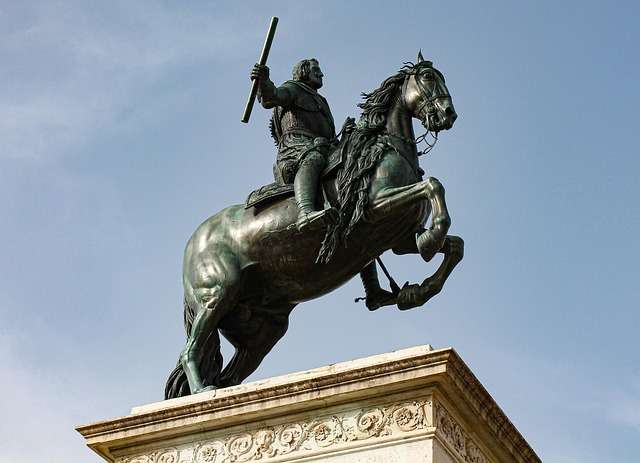
Madrid is not usually the first city people name when they think about European baseball. Spanish baseball is often associated with Catalonia, Valencia, Tenerife, Navarra, and the national team’s international competitions. But Madrid has a deeper baseball story than its modern visibility suggests. The city has been part of Spanish baseball history for decades, with old sections connected to major football clubs, a long-running baseball field at La Elipa, national league competition, youth development, and clubs in the wider Madrid metropolitan area.
Madrid baseball is not a story of mass popularity. It is not a city where baseball dominates the sports calendar or fills major stadiums. Football, basketball, tennis, cycling, athletics, and other sports have much larger public profiles. But Madrid has still mattered to Spanish baseball because it has provided clubs, facilities, federation activity, national competitions, and a central-city presence in a sport that has often survived through committed communities rather than mainstream attention.
Madrid’s Place in Spanish Baseball History
Baseball in Spain developed through several influences: Cuban immigration, American presence, multi-sport clubs, military and diplomatic communities, and the work of local organizers who wanted to establish the sport inside Spanish athletic culture. Spain’s national governing body, the Royal Spanish Baseball and Softball Federation, was established in 1944 and is headquartered in Madrid. That alone gives the capital an institutional role in the sport’s national development.
Madrid also became part of the early club history of Spanish baseball. A historical overview of baseball in Spain notes that when baseball became organized in the country during the mid-twentieth century, major Spanish sports clubs added baseball sections, including Real Madrid, FC Barcelona, Atlético de Madrid, and RCD Espanyol. That is an important detail because it places baseball inside the broader Spanish multi-sport club model, not merely as a foreign pastime on the edge of the sporting landscape.
The old baseball sections connected to Madrid’s football institutions show how different the Spanish sports ecosystem once looked. Real Madrid, Atlético Madrid, and Rayo Vallecano are now known globally or nationally for football, while Real Madrid also remains a major basketball power. But there was a period when multi-sport identity allowed baseball to find space inside large club structures.
Real Madrid’s baseball section is one of the most striking examples. A 2019 historical article about Real Madrid baseball reported that the club fielded a baseball team from 1903 until around 1989. The survival of that section for much of the twentieth century shows that baseball was not always as invisible in Madrid as it may seem today. It existed inside one of the world’s most famous sports institutions, even if it never became central to the club’s public identity.
Madrid also had competitive baseball beyond Real Madrid. Rayo Vallecano’s baseball section became a short but important chapter. AS reported that Rayo founded its baseball section in 1966, rose to Spain’s top level, won the national league in 1970, trained with Americans from the Torrejón base, played at La Elipa, and reached the European Cup quarterfinals before the section was dissolved in 1973. That story captures the unusual shape of Madrid baseball history: short bursts of high-level ambition, connections to larger sports clubs, and reliance on facilities and external influences that helped raise the level of play.
La Elipa and the Geography of Madrid Baseball
Any serious history of baseball in Madrid has to include La Elipa. The baseball field at La Elipa has been one of the city’s most important baseball sites, and it appears repeatedly in accounts of Madrid baseball. Rayo Vallecano used La Elipa during its baseball years, and the field later remained one of the key places where baseball in Madrid could be played, taught, and watched.
La Elipa matters because baseball requires infrastructure that most sports do not. A football field can be adapted in many neighborhoods. Basketball courts can be built in schools and parks. Baseball needs a diamond, backstop, dugouts, outfield space, pitching mound or pitching area, and enough room for safe play. Cities with limited baseball facilities face a direct development problem: even if there are players and coaches, the sport cannot grow easily without fields.
In Madrid, La Elipa has functioned as more than a field. It has been a symbol of continuity. It links older baseball stories to newer development efforts. It has hosted local baseball activity and more recent international-facing events. In 2025, AS reported that Major League Baseball’s interest in Spain included a major scouting-style event at the La Elipa baseball field in Madrid, where all MLB franchises had representatives evaluating young talent.
That event is important for Madrid’s baseball identity because it connects the city’s local baseball infrastructure to the global professional game. Madrid is not a major baseball market, but La Elipa provided a stage where scouts, prospects, coaches, and development organizers could gather. The presence of tracking technology, international scouts, and young Spanish prospects showed a modern version of Madrid baseball: less connected to old football-club sections, more connected to player development, scouting, and the possibility of Spain becoming a more serious baseball talent market.
Madrid’s baseball geography also extends beyond the central city. The wider metropolitan area matters, especially through clubs in surrounding municipalities. In European baseball, metropolitan baseball is often more important than city-center baseball alone. Clubs may be based in suburbs or nearby towns because that is where fields, local support, and youth programs exist.
Madrid Clubs and the Spanish Baseball League Structure
Modern Madrid baseball sits inside Spain’s national baseball structure. The top level of Spanish baseball is the Spanish Baseball League, formerly known as the División de Honor de Béisbol. It is overseen by the Royal Spanish Baseball and Softball Federation and functions as the country’s highest baseball competition. Baseball-Reference’s Bullpen also identifies the Spanish Baseball League as Spain’s top baseball league and notes that teams from the league have won the European Cup, showing that Spanish club baseball has sometimes had continental impact.
Madrid’s role in that structure has not always been constant. Spanish baseball’s strongest modern clubs have often come from places such as Catalonia, Valencia, Navarra, Tenerife, and other regions. But Madrid’s metropolitan area has remained relevant through clubs, facilities, and participation in national baseball and softball structures.
CBS Rivas is one of the most important baseball-softball clubs in the Madrid region. Based in Rivas-Vaciamadrid, it represents the kind of metropolitan club that gives Madrid-area baseball a real modern base. Rivas is especially visible in Spanish softball, where CBS Rivas has won national titles, including the Spanish División de Honor de Sófbol. WBSC Europe reported CBS Rivas winning the Spanish National Championship in softball by defeating CB Viladecans in a best-of-five series. WBSC also reported Rivas repeating as Spanish softball league champions after sweeping Viladecans and finishing a season undefeated at 16–0.
That softball success matters for baseball because in Spain, baseball and softball are closely connected through shared clubs, federations, fields, coaches, and development systems. A club like CBS Rivas helps keep bat-and-ball sports visible in the Madrid region. Even when the strongest headline is softball, the club infrastructure supports the broader baseball-softball ecosystem.
Madrid’s club history also includes the memory of clubs attached to football institutions. Real Madrid, Atlético Madrid, and Rayo Vallecano no longer function as baseball powers, but their historical sections show that Madrid once had baseball embedded inside larger sports organizations. The modern club model is different. It is more specialized, more dependent on baseball-softball communities, and less likely to be carried by massive multi-sport brands.
That shift says a lot about baseball’s position in Madrid. The sport has moved from being one section inside big clubs to being sustained by dedicated baseball-softball clubs and development programs. That can make the sport less visible to the casual public, but it may also give it a clearer internal identity.
The Professional Question: Can Madrid Become a Baseball Market?
Madrid is a complicated baseball market because it has everything a sport wants in theory: population, international profile, transportation, media access, corporate presence, and major sports infrastructure. But baseball needs more than a big city. It needs fields, coaches, youth systems, regular competition, players who grow up in the sport, and enough spectators or participants to support the ecosystem.
The old professional or semi-professional dream in Madrid has appeared in different forms. In the twentieth century, football clubs with baseball sections gave the sport prestige and institutional support. Rayo Vallecano’s 1970 league title and European Cup appearance showed that Madrid baseball could compete at a high level when the right players, facilities, and organization came together.
In the modern period, the professional question looks different. Madrid is less likely to suddenly create a traditional professional baseball club on the model of an MLB team or an NPB team. A more realistic professional pathway is development-oriented: showcases, academies, international scouting, partnerships, Spanish national league clubs, Baseball5, softball growth, and players using Spain as a bridge into European or American baseball.
The 2025 MLB-linked showcase at La Elipa points toward that version of the future. According to AS, all MLB franchises had representatives present, and the event used technology such as TrackMan to evaluate young players. That does not mean Madrid is about to become an MLB market. It does mean that Madrid can be part of the scouting and development map if enough young players, coaches, and organizers create a credible pathway.
This is where Madrid’s international character matters. The city has Latin American communities, international schools, diplomatic networks, and residents from countries where baseball has more cultural weight. Players with family connections to Venezuela, Cuba, the Dominican Republic, Colombia, Nicaragua, Puerto Rico, Mexico, and the United States may give Madrid baseball a participation base that looks different from older Spanish baseball. The question is whether that cultural connection can be converted into organized clubs, youth teams, and higher-level competition.
Madrid also has an advantage as Spain’s capital. National federation activity, government relationships, international events, and media attention can all pass through the city. The Royal Spanish Baseball and Softball Federation being headquartered in Madrid reinforces that national administrative role.
Madrid Baseball and the Spanish National Baseball Picture
Madrid’s baseball history cannot be separated from the wider Spanish baseball story. Spain has never been one of Europe’s deepest baseball countries in the way that Italy and the Netherlands have been, but it has had moments of real international quality. The Spanish Baseball League has sent clubs into European competition, and Spain’s national team has appeared in World Baseball Classic contexts and European tournaments.
Within that national picture, Madrid has played several roles. It has been an institutional capital through the federation. It has been a historical club center through Real Madrid, Atlético Madrid, Rayo Vallecano, and other Madrid-area teams. It has been a field and facility center through La Elipa. It has also been a development and scouting stage in the modern era.
However, Madrid is not the only or even always the strongest center of Spanish baseball. Catalonia, Valencia, Navarra, Tenerife, and other regions have had major club and player-development roles. That distinction matters. A strong Madrid baseball article should not overstate Madrid as the whole of Spanish baseball. Instead, Madrid should be presented as one important node in a wider national system.
This is also why the city’s baseball future depends on connection rather than isolation. Madrid-area clubs need competition with the rest of Spain. Young players need exposure to strong national league programs. Spanish prospects need international games. National team players need club environments that prepare them for European and global competition.
Madrid’s value is partly symbolic. If baseball can grow in the capital, it can gain visibility. If it can use La Elipa and other facilities for youth development, showcases, and tournaments, it can become more than a small local scene. If Madrid-based clubs can connect with Latin American communities and Spanish youth athletes, the city could become a more important baseball development area.
The Lost Baseball Sections of Madrid’s Big Clubs
One of the most fascinating parts of Madrid baseball history is the old connection between baseball and major football clubs. Modern fans usually think of Real Madrid and Atlético Madrid almost entirely through football, with Real Madrid also known for basketball. But the mid-twentieth-century Spanish sports club model was broader.
The fact that Real Madrid and Atlético Madrid once had baseball sections shows that baseball had a place inside Spanish multi-sport experimentation. These sections did not survive as central parts of the clubs’ identities, but they are important historical evidence. Baseball was not simply hidden in informal parks. It was once important enough for major clubs to field teams.
Rayo Vallecano’s baseball section offers a clearer narrative because its rise was dramatic. Founded in 1966, it reached the top level, won the national league in 1970, and reached the European Cup quarterfinals before disappearing in 1973. That is a full baseball arc in less than a decade: creation, rapid improvement, national success, European exposure, and dissolution.
The Rayo story also shows why Madrid baseball has struggled with continuity. Success can happen, but maintaining a baseball section requires long-term funding, facilities, administrative support, and player development. When leadership changes or institutional priorities shift, baseball can be vulnerable. Football clubs naturally focus on football. Smaller sports sections often survive only when the club sees a strategic reason to keep them.
In that sense, modern specialized baseball-softball clubs may be more stable than old football-club baseball sections. They may not have the same brand power, but they are built around the sport itself. Their members, coaches, and players are there because they care about baseball or softball specifically.
Youth Development, Immigration, and the Next Madrid Baseball Cycle
The future of Madrid baseball will depend heavily on youth development. A city cannot build baseball from adult interest alone. Baseball requires years of repetition: throwing, catching, hitting, fielding, pitching, baserunning, and game awareness. Players who start young have a major advantage because the sport’s movements are specific and technical.
Madrid’s youth baseball opportunity is tied to three groups. The first is Spanish families who discover baseball through clubs, schools, municipal programs, or international exposure. The second is families from baseball-playing countries who already understand the sport. The third is multi-sport athletes who may not begin as baseball players but have the coordination, speed, arm strength, or hitting ability to adapt.
Latin American immigration can be especially important. In many European cities, baseball survives partly because people from Venezuela, Cuba, the Dominican Republic, Colombia, Nicaragua, Mexico, and other baseball countries bring the sport with them. Madrid, as a major international capital, has the social base to support that kind of baseball growth if clubs can organize it.
The MLB showcase reported at La Elipa in 2025 suggests that scouts and development figures see some possibility in Spain’s talent base. The mention of young Spanish prospects and the involvement of all MLB franchises shows that Spain is at least being watched as part of a wider European development market. Madrid can benefit from that attention if the city becomes a recurring site for camps, showcases, academies, and national development events.
Facilities remain the key. Without diamonds, there is no consistent baseball culture. La Elipa gives Madrid a historic and practical anchor, but a city of Madrid’s size needs more than one recognizable baseball site if the sport is going to grow meaningfully. Youth programs need regular training times. Clubs need fields. Tournaments need venues. Scouts need measurable events. Fans need places to watch games.
The Future of Professional and Historical Baseball in Madrid
Madrid baseball has two futures at once. One is historical: preserving the memory of Real Madrid baseball, Atlético Madrid baseball, Rayo Vallecano’s championship season, La Elipa, old league structures, and the city’s role in Spain’s national federation. That history gives Madrid baseball more depth than many people realize.
The other future is developmental: building stronger clubs, using La Elipa and other facilities better, connecting with Latin American communities, supporting youth baseball, expanding softball and Baseball5, and turning Madrid into a credible player-development city inside Spain and Europe.
Madrid is unlikely to become a baseball city in the same way that it is a football or basketball city. That is not the realistic goal. The realistic goal is for Madrid to become a serious baseball node: a place with active clubs, visible youth development, national league participation, scouting events, federation activity, and enough historical memory to give the sport local identity.
The city already has the pieces of a meaningful baseball story. It has the national federation headquarters. It has La Elipa. It has old links to Real Madrid, Atlético Madrid, and Rayo Vallecano. It has a metropolitan baseball-softball ecosystem that includes clubs such as CBS Rivas. It has international communities that understand baseball. It has recent MLB attention through scouting activity.
Madrid baseball is not a mainstream sports story. It is a hidden historical and developmental story. But for a worldwide baseball site, that is exactly what makes it useful. Madrid shows how baseball can exist in a global capital without being dominant: through old clubs, surviving fields, committed organizers, international influence, and the possibility that the next version of Spanish baseball may grow from places that once seemed peripheral to the game.
Interested in Sports in Madrid (Spain)?
American Football in Madrid | Basketball in Madrid | Cricket in Madrid | Football (Soccer) in Madrid | Hockey in Madrid | Rugby in Madrid