
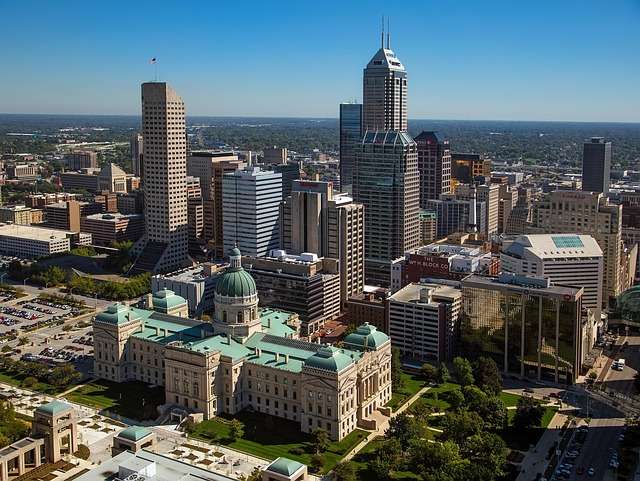
Indianapolis hosts one of the Midwest’s most active baseball ecosystems. Indianapolis has one of the most durable professional baseball histories in the United States. The city is not a Major League Baseball market, but it has been a serious baseball city for more than a century through minor league baseball, Negro leagues baseball, historic ballparks, and a downtown baseball culture that has made Victory Field one of the most recognizable parks in the minors. Indianapolis baseball is not defined by a single major league franchise. It is defined by continuity.
The Indianapolis Indians began play in 1902 and remain one of the oldest continuously operating minor league franchises in American professional baseball. The city also had major Black baseball history through the Indianapolis ABCs and Indianapolis Clowns, two names that connect Indianapolis to the Negro leagues and to some of the most important players and personalities in baseball history. That combination gives Indianapolis a layered baseball identity: minor league city, Negro leagues city, downtown ballpark city, and long-term baseball market.
The Early Professional Baseball Roots of Indianapolis
Professional baseball in Indianapolis became firmly organized in the early twentieth century. The Indianapolis Indians were founded in 1902 as a charter member of the American Association, a league that became one of the major forces in high-level minor league baseball. The franchise’s first home was East Washington Park, and the team quickly established itself as a serious professional operation by winning the first American Association championship in 1902.
That early success mattered because Indianapolis was not simply hosting occasional baseball. It was becoming part of the organized professional baseball map. The American Association gave cities such as Indianapolis, Louisville, Minneapolis, St. Paul, Toledo, Columbus, Milwaukee, and Kansas City a strong baseball structure outside the major leagues. For Indianapolis, that league identity became central. The city could support high-level baseball, develop players, attract crowds, and keep a franchise alive through changing baseball eras.
The Indians moved through several early ballparks, beginning with East Washington Park from 1902 to 1904 and then West Washington Park from 1905 to 1931. Those early parks connected baseball to the city’s growth, streetcar-era entertainment culture, and neighborhood sports life. Baseball was a public event, but it was also a civic marker. A city with a stable professional baseball club could see itself as part of the national sports conversation even without a major league team.
Indianapolis also benefited from the structure of minor league baseball itself. For much of the twentieth century, strong minor league teams were not merely developmental branches of major league organizations in the modern sense. They were local entertainment institutions with their own identities, rivalries, and civic meaning. The Indianapolis Indians fit that model. They were a professional team that represented the city directly, not just a temporary stop for future major leaguers.
The Indianapolis Indians and Minor League Continuity
The Indianapolis Indians are the backbone of the city’s professional baseball history. Since 1902, the franchise has played at the highest level of the minor leagues, though the labels have changed over time. The team played in the American Association for much of its history, spent time in the International League and Pacific Coast League, returned to the revived American Association, and later rejoined the International League after the American Association dissolved again. Today, the Indians are the Triple-A affiliate of the Pittsburgh Pirates.
That continuity is rare. Minor league baseball history is full of franchise moves, league collapses, name changes, relocations, and long gaps. Indianapolis avoided that fate. The city kept professional baseball alive through changes in transportation, radio, television, suburbanization, major league expansion, minor league restructuring, and the modern affiliate system.
The Indians’ championship history also gives the franchise substance beyond longevity. The club has won multiple league championships, including American Association and International League titles, and it has also won postseason competitions such as the Little World Series, Junior World Series, Triple-A Classic, and Triple-A World Series. Those titles show that Indianapolis has not merely preserved a team; it has repeatedly fielded successful teams at the upper end of minor league baseball.
The franchise’s role has changed over time. In earlier decades, the Indians functioned more as an independent civic baseball power within a high-level minor league. In the modern era, they are also part of the player-development system of a major league club. As a Triple-A affiliate, Indianapolis is often the final step before the majors for prospects, rehab assignments, roster depth, and players trying to return to MLB.
That gives Indianapolis fans a specific kind of baseball experience. They see players who may soon reach the major leagues, but they also follow a local club with its own history. That dual identity is one of the strengths of high-level minor league baseball. Indianapolis is both a developmental stop and a baseball city with a memory.
Bush Stadium and the Old Ballpark Era
For much of the twentieth century, Indianapolis baseball was identified with the ballpark later known as Bush Stadium. The Indians played there from 1931 through 1996, making it one of the most important baseball sites in the city’s history. The park was originally known as Perry Stadium, later became Victory Field during and after World War II, and then was renamed for Owen J. Bush. The current Victory Field, which opened in 1996, inherited part of that naming history.
Bush Stadium represented an older era of baseball architecture and urban sports life. It was not a retro-modern downtown ballpark like the current Victory Field. It belonged to the concrete-and-steel generation of baseball parks that served minor league cities for decades. It hosted not only Indianapolis Indians games, but also other chapters of the city’s baseball life, including periods connected to Negro leagues baseball and barnstorming baseball culture.
The long life of Bush Stadium also helped Indianapolis maintain baseball continuity. A stable ballpark gives a franchise roots. Fans know where the team lives. Generations of families associate baseball with the same place. Players, coaches, broadcasters, and local media develop a shared geography around the park.
By the 1990s, however, the old stadium no longer matched the direction of minor league baseball. Across the country, cities were building new downtown ballparks designed to be cleaner, more comfortable, more commercially flexible, and more connected to urban redevelopment. Indianapolis followed that trend with the construction of the new Victory Field in White River State Park. The move did not erase Bush Stadium’s importance. It marked the transition from one era of Indianapolis baseball to another.
Victory Field and the Downtown Baseball Renaissance
Victory Field opened on July 11, 1996, and became the modern home of Indianapolis baseball. Located in White River State Park in downtown Indianapolis, the ballpark gave the Indians a new civic stage and helped make minor league baseball part of the city’s downtown entertainment identity. Victory Field replaced Bush Stadium and became the fifth ballpark used by the Indians franchise.
The ballpark’s name carries historical weight. Bush Stadium had been called Victory Field from 1942 to 1967, with the name connected to the United States’ involvement in World War II. The current Victory Field reused the name in a new downtown setting, turning an older wartime baseball identity into a modern civic brand.
Victory Field is widely regarded as one of the best minor league ballparks in the country. It has been recognized by outlets such as Baseball America and Sports Illustrated, and its design helped define the late twentieth-century wave of downtown minor league parks. The stadium includes fixed seating, lawn seating, skyline views, and a location that places baseball near museums, canals, restaurants, and other downtown destinations.
The ballpark also became part of Indianapolis’ broader downtown redevelopment story. Minor league baseball in this context is not only about what happens between the lines. It is also about urban planning, civic branding, tourism, family entertainment, and the reuse of downtown space. Victory Field showed how a minor league club could become a downtown anchor even without major league status.
That success is part of why Indianapolis is often discussed as a strong sports city. The city has the Colts, Pacers, major amateur sports institutions, the Indianapolis 500, NCAA events, and a long tradition of hosting championships. Victory Field fits into that landscape by giving baseball a professional, accessible, downtown presence.
Negro Leagues Baseball in Indianapolis
Indianapolis baseball history cannot be told only through the Indians. The city was also an important Black baseball city, especially through the Indianapolis ABCs and Indianapolis Clowns. These teams connect Indianapolis to the Negro leagues, segregation-era baseball, barnstorming culture, and some of the most important figures in the sport’s history.
The Indianapolis ABCs were one of the city’s most significant Black baseball teams. They are associated with early Negro leagues history and with Oscar Charleston, one of the greatest players in baseball history. Charleston, an Indianapolis native, became one of the defining stars of Black baseball and was later inducted into the National Baseball Hall of Fame. MLB’s Negro leagues material includes the ABCs among the historic Negro leagues teams, with the important reminder that Negro leagues records are incomplete and have been reconstructed through multiple sources.
The Indianapolis Clowns added another major chapter. MLB notes that the Clowns began in the 1930s in Miami as the Ethiopian Clowns, evolved from entertainers into a true baseball team, joined the Negro leagues after moving to Cincinnati, and later relocated to Indianapolis. The Clowns continued in the Negro American League after the final Negro World Series in 1948 and won the league title in 1950.
The Clowns are also famous because Hank Aaron played for them in 1952 before signing with the Boston Braves organization. Aaron’s time with the Clowns was brief, but historically important. It connects Indianapolis baseball to one of the greatest players ever to play the game. SABR’s research on Henry Aaron and the 1952 Indianapolis Clowns places that season inside Aaron’s early professional path and the late Negro leagues environment.
Indianapolis’ Negro leagues legacy also includes Toni Stone, one of the first women to play in the Negro leagues. She played for the Indianapolis Clowns, making the city part of a rare and important chapter in women’s baseball history. The city’s Black baseball past is not a side note. It is central to understanding why Indianapolis matters historically.
The ABCs, Clowns, and Modern Recognition
Modern Indianapolis baseball has increasingly worked to recognize the city’s Negro leagues heritage. The Indianapolis Indians have promoted events and collections connected to the Indianapolis ABCs and Indianapolis Clowns, including Negro Leagues games and a Negro League Heritage Collection. These efforts reflect a broader shift in baseball: teams and institutions are now working harder to acknowledge Black baseball history that was overlooked, separated, or minimized for decades.
This recognition matters because Indianapolis’ baseball history was never only white minor league baseball. Segregation created parallel baseball systems, and Black teams often carried extraordinary talent, community meaning, and entertainment value despite unequal resources and limited formal recognition. A city that remembers only the Indians would be remembering only part of its baseball past.
The ABCs and Clowns also complicate the idea of Indianapolis as merely a minor league city. Through Negro leagues baseball, Indianapolis was connected to elite Black baseball, barnstorming circuits, national Black sports media, and players who shaped baseball history. Oscar Charleston, Hank Aaron, Toni Stone, and other figures make Indianapolis part of a much larger story.
Recent attention to Negro leagues statistics has also raised the visibility of teams such as the ABCs and Clowns. As more Negro leagues data is incorporated into official baseball history, cities like Indianapolis gain a fuller place in the record. The story becomes less about nostalgia and more about historical correction.
For Indianapolis, that correction is especially valuable. It gives the city a deeper baseball identity than the familiar Triple-A narrative alone. Indianapolis was a place where professional baseball, Black baseball, comedy baseball, barnstorming baseball, and player-development baseball all crossed paths.
Indianapolis as a Player-Development City
In the modern era, Indianapolis is best understood as a high-level player-development city. As a Triple-A affiliate, the Indians sit one step below Major League Baseball. That means the city regularly sees top prospects, major league rehab assignments, veteran depth players, and players moving between Triple-A and the majors.
The current affiliation with the Pittsburgh Pirates gives Indianapolis a direct connection to MLB roster building. Pirates prospects can pass through Victory Field on their way to Pittsburgh, while injured major leaguers may come to Indianapolis for rehab games. This creates a changing roster, which is one of the defining features of Triple-A baseball. Fans may see a player for a few weeks before he is promoted, traded, injured, released, or called back down.
That instability can be challenging for traditional fan attachment, but it also gives Triple-A baseball excitement. Indianapolis fans can see players before they become major league regulars. They can also watch experienced professionals trying to extend or revive their careers. The team is local, but the roster is constantly linked to the major league system.
This player-development role has been part of the broader transformation of minor league baseball. Minor league clubs once had more independent local identity. Today, affiliated clubs are tied closely to MLB development strategies, analytics, pitch design, defensive positioning, workload management, and roster planning. Indianapolis sits near the top of that system.
Yet the city has maintained its local identity anyway. That is the key. Indianapolis baseball is not only about who is on the roster in a given season. It is about the continuity of the franchise, the setting of Victory Field, and the city’s long habit of supporting professional baseball.
Why Indianapolis Baseball Endures
Indianapolis baseball endures because it has never needed major league status to matter. That is the central point. The city has built a baseball identity around stability, accessibility, history, and local connection. The Indians give fans professional baseball every summer. Victory Field gives the city a beautiful downtown ballpark. The ABCs and Clowns give Indianapolis a deeper historical connection to Black baseball and the Negro leagues.
This combination is rare. Many cities have minor league teams. Some have Negro leagues history. Some have great ballparks. Indianapolis has all three, plus more than a century of professional continuity.
The city’s baseball story also fits Indianapolis itself. Indianapolis is a major sports city that has often been especially strong at hosting, organizing, and sustaining sports institutions. Baseball fits into that civic pattern. It may not be the city’s biggest sports brand, but it has been one of its most durable.
The future of Indianapolis baseball depends on maintaining that balance. The Indians need to remain a strong Triple-A franchise. Victory Field needs to stay central to downtown life. The city’s Negro leagues history needs to remain visible, not treated as a once-a-year tribute. Youth baseball, high school baseball, and local baseball communities also matter because professional baseball is strongest when it sits inside a wider baseball culture.
Indianapolis baseball is not a story of absence because the city lacks MLB. It is a story of presence: a professional team that has lasted since 1902, historic Black baseball teams that shaped the game, ballparks that defined different eras, and a downtown stadium that keeps baseball visible in the city’s modern sports life. That is why Indianapolis belongs in any serious map of American baseball history.


Interested in Sports in Indianapolis?
American Football in Indianapolis | Basketball in Indianapolis | Cricket in Indianapolis | Football (Soccer) in Indianapolis | Hockey in Indianapolis | Rugby in Indianapolis