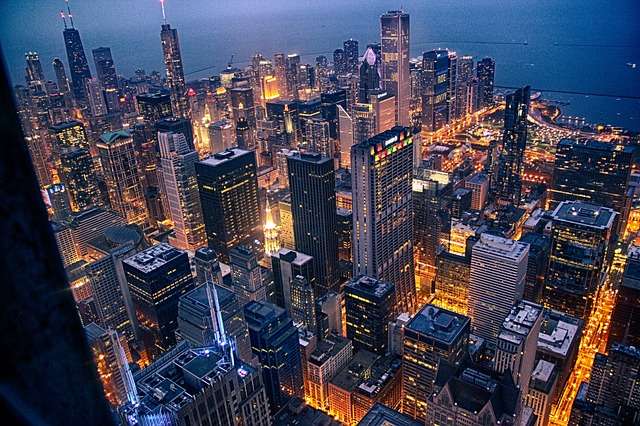
Baseball in Illinois is a powerhouse mix of major-metro polish and small-town tradition. Illinois baseball is one of the deepest professional baseball stories in the United States. The state has two Major League Baseball franchises, one of the oldest National League clubs, one of the American League’s original powers, a major Negro leagues legacy, a long minor league tradition, and a network of independent and summer baseball teams that keep the sport visible beyond Chicago. Illinois is not just a state with baseball teams. It is one of the places where modern professional baseball became a civic institution.
The center of the story is Chicago, but Illinois baseball is larger than Chicago. The Cubs and White Sox define the state’s major league identity, but cities such as Peoria, Joliet, Schaumburg, Geneva, Sauget, Normal, Rockford, Springfield, Decatur, and Quincy have all contributed to the state’s baseball map. Illinois baseball history includes major league dynasties, long losing stretches, historic ballparks, the founding culture of the National League, the rise of Black professional baseball, and the survival of minor league baseball as affordable summer entertainment.
Chicago and the Birth of Major League Baseball
Illinois has a direct connection to the early structure of major league baseball through the Chicago Cubs franchise. The Cubs trace their history to the Chicago White Stockings, who were part of the original National League in 1876. The National League’s original members included Chicago, Boston, Cincinnati, Hartford, Louisville, New York, Philadelphia, and St. Louis, making Chicago one of the foundational cities in the oldest continuing major league.
This matters because Chicago was not a later expansion market. It was there at the beginning of the National League era. The city helped define what professional baseball could become: a league-based urban sport with scheduled competition, civic loyalty, paid players, newspaper coverage, and long-term franchise identity.
The early Chicago National League club was one of the strongest teams of the nineteenth century. Under figures such as Albert Spalding and Cap Anson, Chicago became a central baseball power. The club won the first National League pennant in 1876 and built a reputation as one of the sport’s most important early organizations. The franchise’s later identity changed from White Stockings to Colts to Orphans to Cubs, but the institutional line remained central to National League history.
That makes the Cubs one of the most historically significant franchises in American sports. Their story reaches from the nineteenth-century birth of league baseball to modern MLB, from West Side Park to Wrigley Field, from early pennants to the 1907 and 1908 World Series titles, from the long championship drought to the 2016 World Series. Illinois baseball history cannot be separated from the Cubs because the franchise is part of the game’s original professional architecture.
The Cubs, Wrigley Field, and the North Side Tradition
The Chicago Cubs are one of baseball’s great memory franchises. Their identity is tied to history, ballpark culture, neighborhood baseball, radio and television, generational fandom, and the emotional weight of waiting. Even when the team struggled, the Cubs remained nationally visible because Wrigley Field turned the franchise into something larger than its record.
Wrigley Field has been home to the Cubs since 1916 and is one of the most famous ballparks in the world. The ivy-covered outfield walls, hand-operated scoreboard, rooftop views, neighborhood setting, and day-game tradition turned the park into a baseball landmark. For many fans, Wrigley Field became the symbol of old baseball: slower, local, imperfect, and built into the fabric of a city neighborhood.
The Cubs’ early twentieth-century peak came with one of the strongest teams in the sport. The club won the 1907 and 1908 World Series and returned to the World Series several times afterward. But the 1908 title became the beginning of a famous championship drought that lasted until 2016. That drought shaped Cubs culture for more than a century. It turned the team into a national symbol of loyalty, frustration, hope, and inherited fandom.
The 2016 World Series changed the franchise’s modern history. The Cubs defeated Cleveland in seven games, ending the longest championship drought in major North American professional sports. For Illinois baseball, that title was not simply another championship. It closed one of the sport’s most famous historical loops and turned generations of waiting into one of the defining baseball moments of the twenty-first century.
The Cubs’ influence also extends beyond Chicago. Because of WGN broadcasts, the team developed a national following, especially before every MLB game was easy to watch online. The Cubs became part of baseball life across Illinois and far beyond the state, giving the North Side franchise an identity that was both intensely local and unusually national.
The White Sox and the South Side Baseball Identity
The Chicago White Sox give Illinois its second major league identity. The franchise joined the American League as one of its original clubs at the start of the twentieth century and quickly became one of the league’s important teams. The White Sox won the first American League pennant in 1901, before the modern World Series began in 1903, and later won the 1906 and 1917 World Series.
The White Sox story is different from the Cubs story. It is more South Side, more industrial, more working-class in its public image, and more complicated historically. The team’s identity has often been built around toughness, pitching, defense, and a fan base that sees itself as more local and less romanticized than the Cubs’ national brand.
The most infamous chapter in White Sox history is the 1919 Black Sox scandal, when members of the team were accused of conspiring with gamblers to throw the World Series. The scandal reshaped baseball governance and led to the creation of the commissioner’s office under Kenesaw Mountain Landis. For Illinois baseball history, it remains one of the sport’s most important cautionary episodes: a moment when professional baseball’s credibility was threatened and the game’s institutional structure changed in response.
The White Sox also have rich positive history. The 1959 “Go-Go Sox” won the American League pennant with speed, pitching, and defense. The team’s 1983 “Winning Ugly” season became part of franchise lore. The 2005 White Sox swept the Houston Astros to win the World Series, ending an 88-year championship drought and giving the South Side one of its great baseball celebrations.
Comiskey Park, and later Guaranteed Rate Field, gave the White Sox their own ballpark identity. Old Comiskey was one of baseball’s classic stadiums, while the current ballpark has gone through several eras of redesign and rebranding. Unlike Wrigley Field, which became a national tourist destination, the White Sox ballpark experience has usually been more team-centered than venue-centered. That distinction is part of the difference between the two Chicago baseball identities.
Chicago’s Negro Leagues Legacy
Illinois baseball history is incomplete without Black baseball, and Chicago was one of the most important cities in Negro leagues history. The Chicago American Giants were one of Black baseball’s great franchises. Organized by Rube Foster, the team began in 1910 after Foster and Frank Leland separated from the Leland Giants and formed different clubs. The Negro Leagues Baseball Museum describes the American Giants as the longest continuous franchise in Black baseball history.
Rube Foster’s importance goes far beyond Chicago. He is known as the “Father of Black Baseball” because of his central role in establishing the Negro National League in 1920. Foster was not only a manager and owner. He was a strategist, organizer, promoter, and institution builder. His work helped give Black professional baseball a league structure at a time when Black players were excluded from Major League Baseball.
The Chicago American Giants were a dynasty in the early Negro leagues era. They played at South Side Park and later at other venues, becoming one of the most respected Black baseball organizations in the country. The franchise helped make Chicago a center of Black baseball talent, business, and culture.
This history matters because Illinois baseball was shaped by both inclusion and exclusion. While the Cubs and White Sox played in segregated major leagues, Black players, managers, and owners built their own professional systems. Chicago’s Black baseball scene was not secondary in quality or ambition. It was a major part of the sport’s professional life.
The American Giants’ legacy also connects to the Great Migration, when Black Americans moved to northern cities such as Chicago in large numbers. Baseball became part of that urban cultural world. Teams represented communities, newspapers covered games, and stars became public figures. Chicago’s Negro leagues history therefore belongs not only to baseball history, but also to the history of Black Chicago.
Minor League Baseball Across Illinois
Illinois’ baseball map extends well beyond MLB. Minor league and independent baseball have given smaller and mid-sized communities their own professional or professional-style teams. This matters because a state’s baseball culture is not built only by major league stadiums. It is also built by summer nights in smaller parks.
Peoria is one of Illinois’ strongest minor league cities. The Peoria Chiefs have long been part of the Midwest League and currently serve as an affiliated minor league team. The Chiefs give central Illinois a professional baseball identity connected to player development, local fans, and affordable access to the sport. Illinois’ official tourism site lists the Peoria Chiefs among the state’s minor league baseball options.
The Kane County Cougars, based in Geneva, have also been one of Illinois’ most recognizable non-MLB baseball brands. The Cougars have had affiliated and independent eras and have drawn fans from Chicago’s western suburbs and the Fox Valley region. Their success shows how suburban baseball can build a strong local following outside the city.
Independent baseball has become especially important in Illinois. Teams such as the Joliet Slammers, Schaumburg Boomers, Windy City ThunderBolts, Gateway Grizzlies, and others have given the state a strong independent-league presence. Illinois’ tourism office highlights the Kane County Cougars and Peoria Chiefs in affiliated/minor league contexts and also points to Frontier League teams such as Joliet, Schaumburg, and the Windy City ThunderBolts.
These teams matter because they keep baseball accessible. MLB games can be expensive and concentrated in Chicago. Minor league and independent teams bring professional baseball closer to families, suburbs, smaller cities, and downstate communities. They also give players another chance to continue careers, get noticed, or simply play at a high level.
Downstate Baseball and Regional Identity
Illinois baseball can sometimes be reduced to Cubs and White Sox, but that misses the downstate story. Central and southern Illinois have their own baseball traditions, often tied to minor league teams, college programs, town ball, and St. Louis Cardinals fandom.
The southern part of Illinois is geographically and culturally closer to St. Louis than Chicago. That means Cardinals influence is strong in many communities. In parts of Illinois, baseball identity is not Cubs versus White Sox. It is Cardinals country, or a mix of Cardinals, Cubs, and White Sox loyalties depending on family history, media markets, and geography.
This three-way fan geography makes Illinois unusual. Northern Illinois is shaped heavily by Chicago baseball. Central Illinois can be divided. Southern Illinois often leans toward St. Louis. The result is a state with several baseball identities inside its borders.
Downstate baseball has also had historic minor league presence in cities such as Springfield, Decatur, Rockford, Bloomington-Normal, and Quincy. Some teams have disappeared, moved, changed leagues, or shifted to independent baseball, but the pattern is clear: Illinois has long had a baseball culture that connected smaller cities to the professional game.
College baseball also matters in the state’s regional baseball life. Programs such as Illinois, Illinois State, Southern Illinois, Bradley, Eastern Illinois, Northern Illinois, UIC, and others give the state a collegiate baseball layer. These programs do not dominate national attention in the way SEC or ACC baseball powers often do, but they help develop players and maintain baseball visibility outside the professional structure.
Ballparks as Illinois Baseball Landmarks
Illinois baseball history is also a history of ballparks. Wrigley Field is the most famous, but it is not the only important baseball place in the state. Old Comiskey Park, West Side Park, South Side Park, Guaranteed Rate Field, Dozer Park in Peoria, Northwestern Medicine Field in Geneva, Wintrust Field in Schaumburg, Duly Health and Care Field in Joliet, and other venues all form part of Illinois’ baseball geography.
Wrigley Field represents continuity. It ties modern fans to early twentieth-century baseball and remains one of the sport’s defining venues. Old Comiskey represented a different version of Chicago baseball: South Side, urban, loud, and historically layered. The loss of old Comiskey removed one of baseball’s great classic parks, but the memory of the stadium remains central to White Sox history.
Minor league and independent parks serve a different role. They are not national monuments, but they are often more intimate. They allow fans to sit close to the field, meet players, bring families, and experience baseball without the scale or cost of MLB. That kind of ballpark culture is essential to the sport’s survival.
Illinois’ baseball parks also show how the sport has changed. Early parks were often wooden, temporary, or squeezed into urban lots. Classic steel-and-concrete parks became civic landmarks. Modern stadiums were built around amenities, suites, parking, and entertainment. Independent and minor league parks focus on family entertainment and community access. Illinois has examples from every phase of that evolution.
Illinois’ Place in Baseball’s Professional Story
Illinois is one of the most important baseball states because it touches almost every major layer of professional baseball history. It helped launch the National League. It became a two-team MLB state. It played a central role in Black baseball. It built iconic ballparks. It sustained minor league and independent baseball. It produced local fan cultures that are distinct enough to divide neighborhoods, suburbs, and regions.
The Cubs and White Sox are not just two franchises in the same city. They represent two different ways baseball can attach to place. The Cubs are tied to Wrigley Field, North Side identity, national nostalgia, and the long arc from 1908 to 2016. The White Sox are tied to the South Side, American League history, working-class identity, the trauma of 1919, and the triumph of 2005.
The Chicago American Giants add another essential layer. Their story shows that professional baseball in Illinois was never only white major league baseball. Black baseball in Chicago had its own stars, institutions, business leaders, and fan communities. Rube Foster’s work in Chicago helped shape the structure of the Negro leagues and made the city central to one of the sport’s most important histories.
Beyond Chicago, Illinois’ baseball towns show how the sport survives locally. Peoria, Geneva, Joliet, Schaumburg, Sauget, Normal, Rockford, Springfield, and other communities have all given fans a way to experience baseball close to home. The major league teams may dominate attention, but the state’s baseball fabric is wider.
The Future of Professional Baseball in Illinois
The future of Illinois baseball depends on the stability of its major league clubs, the health of minor league and independent teams, the affordability of youth baseball, and the ability of the sport to remain visible in a crowded entertainment market.
The Cubs and White Sox will continue to define Illinois baseball nationally. Their success or failure affects statewide baseball energy. A competitive Cubs team can fill Wrigley Field and dominate the North Side conversation. A competitive White Sox team can energize the South Side and remind the state how powerful that fan base can be when given a serious contender.
Minor league and independent teams will remain important because they keep baseball accessible. For many families, a Peoria Chiefs, Kane County Cougars, Joliet Slammers, Schaumburg Boomers, Gateway Grizzlies, or Windy City ThunderBolts game is a more realistic baseball experience than an MLB game in Chicago. That local layer matters for the long-term health of the sport.
Illinois’ baseball history is already secure. The question is how the state carries it forward. The answer will come from major league ballparks, independent parks, college fields, youth diamonds, and communities that still see baseball as part of summer life.
Illinois baseball is not one story. It is the Cubs, the White Sox, the American Giants, the Negro leagues, Wrigley Field, Comiskey Park, Peoria, Kane County, Joliet, Schaumburg, downstate Cardinals country, Chicago rivalry, and local teams that keep the game alive far from MLB’s brightest lights. That layered history is what makes Illinois one of America’s essential baseball states.
Interested in Sports in Illinois?
American Football in Illinois | Basketball in Illinois | Cricket in Illinois | Football (Soccer) in Illinois | Hockey in Illinois | Rugby in Illinois