
Denver baseball has one of the most important professional baseball histories in the American West. Long before the Colorado Rockies arrived in Major League Baseball, Denver had decades of minor league baseball, old Western League clubs, the Denver Bears, the Denver Zephyrs, big crowds at Mile High Stadium, and a strong local desire to prove that the city could support a major league team.
That makes Denver different from newer expansion markets where Major League Baseball arrived before a deep baseball culture had time to form. Denver had already spent generations as a serious baseball city before 1993. The Rockies gave the city its major league franchise, but they did not create baseball in Denver. They inherited a baseball public that had already watched strong minor league clubs, supported ambitious local owners, filled large stadiums, and pushed for a place in the major leagues.
Denver’s baseball story is also inseparable from place. Altitude, dry air, mountain identity, downtown growth, LoDo redevelopment, Mile High Stadium, and Coors Field all shaped how baseball was played and understood in the city. Professional baseball in Denver has never been only about teams. It has also been about whether baseball could work in a high-altitude city that wanted to be seen as more than a minor league market.
Early Professional Baseball in Denver
Professional baseball in Denver reaches back to the nineteenth century. The city had early baseball teams in the Colorado State League and later became part of the Western League structure. Denver’s baseball identity developed through the same pattern that shaped many American cities before the modern major league map was fixed: local clubs, regional leagues, changing affiliations, financial instability, and repeated attempts to build a lasting professional baseball presence.
The Denver Bears name became the most durable early baseball identity in the city. The Bears existed in different forms across the first half of the twentieth century, often connected to the Western League. These teams gave Denver a recurring professional baseball presence before the city had the population, political leverage, or ownership group needed to make a serious bid for Major League Baseball.
Denver’s location mattered. The city was far from the older baseball centers of the East and Midwest, and for much of baseball history, that worked against it. Travel costs, league geography, and the structure of professional baseball made Denver feel remote from the traditional major league map. But that same distance also helped Denver become a regional sports capital. If a professional baseball team succeeded in Denver, it could draw from a larger Rocky Mountain and High Plains region rather than only from the city itself.
By the postwar era, Denver was ready for a stronger version of professional baseball. The city was growing, the West was becoming more important to American sports, and local leaders wanted Denver to be treated as a major city. Baseball became one of the ways Denver tried to make that argument.
The Denver Bears and the Rise of Triple-A Baseball
Denver baseball changed dramatically in 1955, when the city entered the Triple-A level. The Denver Zephyrs/Bears franchise history shows that the Triple-A team began play in 1955 and remained in Denver through 1992, first as the Denver Bears and later as the Denver Zephyrs. The club played in the American Association, spent time in the Pacific Coast League, and then returned to the American Association.
The postwar Denver Bears were not a casual local operation. Denver Public Library’s history of Denver baseball describes how Bob Howsam and Lee Howsam built a first-class minor league organization, with the Bears affiliated over time with major league clubs including the Yankees, Tigers, White Sox, and Expos. That mattered because Triple-A baseball was the highest level of the minor leagues, and Denver was not simply hosting low-level developmental baseball. The city was watching players close to the major leagues.
The Bears also gave Denver a proving ground. If the city could support a successful Triple-A club, draw big crowds, and operate in a large stadium, it could make the case that it deserved more. Denver was not alone in wanting Major League Baseball, but it had one of the best arguments among western and interior markets.
The team’s success helped. The Denver Bears won multiple league championships, including American Association titles in 1957, 1971, 1976, 1977, 1981, and 1983, before the Zephyrs later won again in 1991. Those championships gave the city a winning baseball identity before the Rockies existed.
The Bears also connected Denver fans to future major league names. Triple-A teams often carry two meanings at once. They are local teams with their own fans, but they are also stepping stones in a larger professional system. Denver baseball had both parts. Fans could care about the Bears as Denver’s team while also watching players and managers move toward the major leagues.
Mile High Stadium and the Minor League Crowd Argument
One of the most important chapters in Denver baseball history is the stadium story. Before it was known nationally as the home of the Denver Broncos, Mile High Stadium had deep baseball roots. It began as Bears Stadium, built for baseball and associated with the Denver Bears. Ballparks of Baseball notes that the original stadium was home to the Denver Bears and later became Mile High Stadium, with the Rockies using it temporarily before Coors Field opened.
This matters because Denver’s baseball ambition was tied to a physical place. Bears Stadium was unusually large for minor league baseball, and that size helped Denver make its case. The city could point to crowds that looked more like major league crowds than typical minor league attendance.
The July 4 games became central to that argument. The Denver Bears and Zephyrs drew enormous Independence Day crowds, including a minor league record of 65,666 fans on July 4, 1982, against the Omaha Royals. Those crowds were not normal everyday attendance, but they mattered symbolically. They showed that Denver could turn baseball into a major civic event.
Mile High Stadium also created a particular version of Denver baseball. It was large, open, and connected to the city’s football identity, but it also gave baseball a stage that made the sport feel bigger than the minor leagues. In many cities, minor league baseball is intimate by design. In Denver, the Bears and Zephyrs sometimes played in a setting that suggested the city was auditioning for something larger.
The stadium’s size also made Denver unusual in the baseball world. Minor league baseball usually depends on closeness, affordability, and neighborhood scale. Denver had those elements, but it also had a venue that could absorb major crowds. That combination helped keep the major league dream alive.
From Bears to Zephyrs
In 1984, the Denver Bears became the Denver Zephyrs. The new name referenced the famous passenger train and gave the team a fresh identity during its final minor league decade. The Zephyrs continued as a Triple-A club from 1984 through 1992 before relocating to New Orleans after Major League Baseball awarded Denver an expansion franchise.
The Zephyrs era sometimes gets overshadowed because the Rockies arrived immediately afterward, but it was an important bridge. The team kept high-level baseball in Denver during the final push toward MLB. It also gave the city one last minor league championship moment before the major league era. The Zephyrs won the 1991 American Association title and the 1991 Triple-A Classic.
The Zephyrs era also produced one of Denver baseball’s strangest and most famous moments. On June 3, 1987, Joey Meyer hit a home run at Mile High Stadium measured at 582 feet, often cited as the longest verified home run in American professional baseball history. That event became part of Denver baseball mythology because it combined altitude, power, and Mile High Stadium into one unforgettable story.
The Zephyrs’ move to New Orleans after the 1992 season marked the end of Denver’s long Triple-A chapter. It was not a failure. It was the result of success. Denver had finally reached the major leagues, and the minor league franchise no longer had the same place in the city’s baseball structure.
The Arrival of the Colorado Rockies
Major League Baseball arrived in Denver in 1993 with the Colorado Rockies, an expansion franchise placed in the National League West. The Rockies played their first two seasons at Mile High Stadium before moving into Coors Field in 1995. Baseball-Reference lists the Colorado Rockies franchise beginning in 1993, with Coors Field becoming the team’s home in 1995.
The Rockies’ arrival changed Denver baseball permanently. The city was no longer making the case that it deserved Major League Baseball. It had it. The challenge became turning a popular expansion team into a competitive and sustainable franchise.
Early attendance was massive. Denver fans responded strongly to the new team, and the Rockies became a key part of the city’s professional sports identity. The franchise also gave the Rocky Mountain region a baseball team of its own. Before the Rockies, many fans in the region followed teams from California, the Midwest, or elsewhere. After 1993, Denver became the baseball capital of a much larger western interior region.
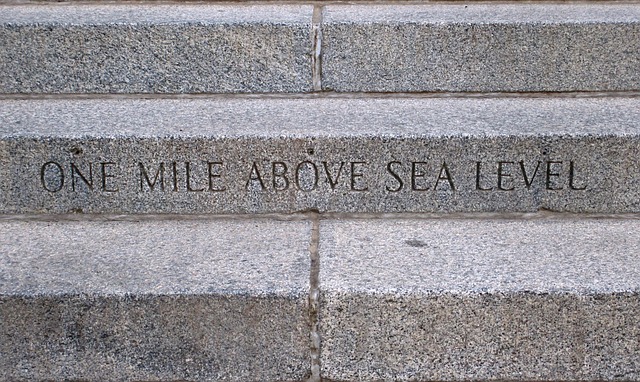
The Rockies also brought a new baseball problem: altitude. Playing major league baseball in Denver was different from playing anywhere else. Pitch movement, batted-ball carry, outfield dimensions, pitcher fatigue, and roster construction all became part of the conversation. Denver’s environment forced the franchise and the league to think differently about how baseball worked at 5,280 feet.
Coors Field and the Making of a Downtown Baseball Identity
Coors Field opened in 1995 and quickly became one of the defining ballparks of the modern MLB era. Located in Lower Downtown, the ballpark became part of Denver’s urban redevelopment story as well as its baseball story. It gave the Rockies a baseball-specific home and moved the city away from the temporary, oversized feel of Mile High Stadium.
The ballpark also became famous for offense. The Rockies’ own Coors Field history notes that in 1999, the Rockies and their opponents combined for 303 home runs at Coors Field, the most ever in one season at one venue, with an average score of 8-7. That offensive environment shaped the reputation of the franchise and the ballpark for decades.
Coors Field became beautiful, popular, and controversial all at once. Fans loved the downtown setting, the mountain views, the open concourses, and the way the ballpark fit into Denver’s social life. Pitchers often found it difficult. Analysts and fans argued about how to judge Rockies hitters and pitchers because the park changed statistical context so dramatically.
The Rockies later introduced the humidor to store baseballs in a more controlled environment, part of the franchise’s long effort to manage the effects of altitude. Even with adjustments, Coors Field remained one of the sport’s most distinctive parks. Denver baseball could not be understood through generic MLB categories. It had its own physics.
Coors Field also helped make baseball part of downtown Denver’s identity. A Rockies game became both a sports event and a city outing. The ballpark anchored restaurants, bars, foot traffic, and summer nights in LoDo. Even during losing seasons, Coors Field remained one of the franchise’s strongest assets.
The Rockies’ Competitive High Points
The Rockies have had an uneven competitive history, but their best moments gave Denver real postseason baseball. The franchise reached the playoffs as a wild card in 1995, becoming the first National League expansion team to make the postseason. That early success confirmed that the Rockies could become competitive quickly, even if long-term consistency proved harder.
The peak came in 2007. The Rockies went on a dramatic late-season run, won the National League pennant, and reached the World Series. That season remains the most important competitive moment in franchise history. The team’s “Rocktober” run gave Denver baseball its closest approach to a championship and created a memory that still defines the franchise’s ceiling.
The Rockies returned to the postseason in 2009, then again in 2017 and 2018. The 2017 and 2018 appearances were especially important because they marked the first time the franchise reached the playoffs in consecutive seasons. Reuters later summarized the club’s history as including five playoff berths and a 2007 World Series appearance while noting the team’s later struggles.
Those high points matter because they prevent the Rockies’ story from being only about frustration. Denver has seen winning baseball. It has seen a pennant. It has seen October crowds at altitude. But the franchise has not yet won a World Series or a division title, and that absence has become part of the Rockies’ identity. The team’s history contains genuine excitement, but not enough sustained success.
The Modern Rockies and Denver’s Baseball Frustration
The modern Rockies have tested Denver’s patience. The franchise has struggled badly in recent years, including consecutive 100-loss seasons and a historically poor 2025 campaign. Reuters reported that the Rockies finished 2025 with a 43-113 record, surpassing the 1962 New York Mets for the fewest wins in the National League’s modern era.
That kind of season changes the tone of a baseball market. Denver has shown that it will support baseball, but support is not the same as satisfaction. Rockies fans have often criticized ownership, player development, front office decisions, and the lack of a consistent plan for winning in the NL West.
The franchise also entered a new ownership and investment chapter in 2026, when Reuters reported that Denver Broncos owners Greg Penner and Carrie Walton Penner acquired a minority ownership stake in the Rockies, reportedly around 40%, while the Monfort family remained in leadership roles. The report said the investment would help eliminate debt and support improvements to the fan experience at Coors Field.
That development matters because it connects the Rockies to Denver’s broader sports ownership landscape. It also suggests that the franchise’s next era may involve both business restructuring and renewed pressure to improve on the field.
The frustration around the Rockies is not proof that Denver is a bad baseball city. It may prove the opposite. Markets that do not care do not stay angry for long. Denver’s baseball public has a long memory, from the Bears and Zephyrs to the Rockies’ early attendance boom to the 2007 pennant. The city knows what baseball can feel like when it matters.
Why Denver Baseball Still Matters
Denver baseball matters because it tells a larger story about how baseball moved west, how minor league cities became major league cities, and how regional identity shaped the modern sports map. The Rockies are the current face of Denver baseball, but they are only one chapter.
The Bears proved that Denver could support high-level professional baseball. The Zephyrs carried that tradition into the early 1990s. Mile High Stadium showed that the city could produce huge baseball crowds. Coors Field gave Denver one of the most recognizable ballparks in the sport. The Rockies gave the Rocky Mountain region a permanent place in Major League Baseball.
The city’s baseball story is not perfect. The Rockies have not won a World Series. They have never won the NL West. The franchise has struggled to create consistent pitching, depth, and player-development success in one of baseball’s most unusual environments. But Denver still belongs in any serious history of professional baseball in the American West.
Denver baseball is a story of ambition. It began as a regional professional baseball city, became one of the strongest minor league markets in the country, forced its way into the major league conversation, and built a downtown ballpark that changed the city’s summer identity. The next chapter depends on whether the Rockies can match Denver’s baseball history with a stronger baseball future.
Interested in Sports in Denver?
American Football in Denver | Basketball in Denver | Cricket in Denver | Football (Soccer) in Denver | Hockey in Denver | Rugby in Denver