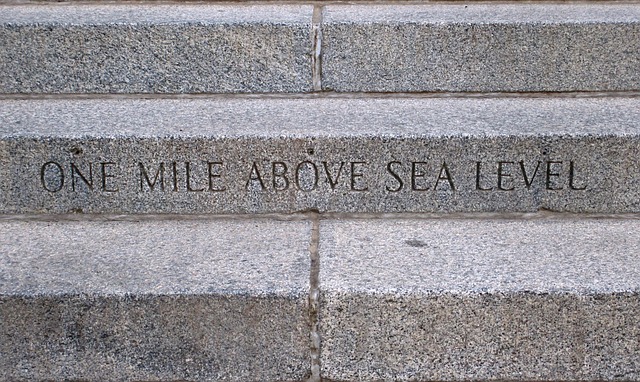
Colorado baseball is usually introduced through the Colorado Rockies, Coors Field, altitude, and the strange physics of playing baseball a mile above sea level. That is the obvious modern story, but it is not the whole story. Long before Major League Baseball arrived in Denver in 1993, Colorado had a serious baseball tradition built through town teams, early minor leagues, semi-professional clubs, Triple-A baseball, and a Denver market that spent decades proving it could support a major league franchise.
This makes Colorado one of the more interesting professional baseball states in the American West. It is not an old National League state like Pennsylvania, Illinois, New York, Ohio, or Missouri. It is not a California-style baseball giant with several MLB clubs and year-round amateur development. Colorado’s baseball identity is newer at the major league level, but older at the professional and community level. The state’s baseball history is a story of waiting, proving, adapting, and then trying to define what winning baseball looks like in one of MLB’s most unusual environments.
Early Baseball in Colorado
Baseball reached Colorado well before the Rockies became the state’s major league symbol. In the late nineteenth and early twentieth centuries, the sport moved across the region through mining towns, railroad communities, military posts, schools, amateur clubs, and early professional leagues. Like much of the American West, Colorado’s early baseball map was shaped by movement: workers, soldiers, students, merchants, and town boosters carried the game into places that were still building civic identities.
Denver quickly became the state’s most important baseball city, but it was not the only one. Pueblo, Colorado Springs, Trinidad, La Junta, Cañon City, and other communities all appeared in early professional or semi-professional baseball structures. These were not large modern sports businesses. They were local teams operating in leagues that could appear, disappear, reorganize, and fold quickly. But they mattered because they gave Colorado a place in the expanding professional baseball map.
One useful example is the Rocky Mountain League, a short-lived Class D league in 1912. Colorado Encyclopedia describes it as a league with semi-professional teams in southern Colorado, while Ballpark Digest lists teams such as the Colorado Springs Millionaires, Pueblo Indians, La Junta Railroaders, Trinidad Indians, and Cañon City clubs. The league did not last, but it shows how baseball had already spread beyond Denver into smaller Colorado communities.
This early period should not be overstated. Colorado was not a national baseball center in the way Chicago, New York, Boston, Philadelphia, St. Louis, or Cincinnati were. But it was part of the broader professional baseball expansion across the West. Baseball gave towns a summer identity, created regional rivalries, and helped connect Colorado communities to the national game.
Denver Before Major League Baseball
Denver was the center of Colorado’s long campaign for major league baseball. The city had professional teams under different names and league structures for decades, but the key modern pre-MLB identity came through the Denver Bears and Denver Zephyrs.
The Denver Bears existed in different forms across baseball history, but the post-1955 Triple-A Bears were especially important. Denver received a Triple-A American Association team after the Kansas City Blues were displaced by the arrival of the American League’s Kansas City Athletics. The team played at what became known as Mile High Stadium, originally Bears Stadium, and became one of the most visible minor league operations in the country.
The Bears were not a small novelty act. They were a serious Triple-A franchise with big crowds, major league affiliations, and championship seasons. Denver’s Triple-A clubs won multiple league titles, including American Association championships in 1957, 1971, 1976, 1977, 1981, 1983, and 1991, with the 1991 title coming under the Zephyrs name.
The team also helped prove that Denver could support baseball at a scale larger than ordinary minor league expectations. Mile High Stadium could hold enormous crowds for baseball, and Denver became famous for Independence Day attendance. The Bears drew 65,666 fans for a July 4, 1982 game against Omaha, a minor league attendance record at the time.
The Denver Bears became the Denver Zephyrs in 1984, taking their name from the famous passenger train. The Zephyrs remained Denver’s Triple-A club through 1992, just before the Rockies began play. In a direct sense, the Zephyrs were the final bridge between Colorado’s minor league past and its major league future.
That Triple-A period matters because it undercuts the idea that baseball suddenly arrived in Colorado in 1993. Major League Baseball arrived in 1993. Baseball culture had already been building for generations.
The Long Road to the Colorado Rockies
The Colorado Rockies were part of Major League Baseball’s 1993 expansion, entering the National League alongside the Florida Marlins. For Colorado, the expansion franchise was the reward after decades of minor league support, civic lobbying, and proof that Denver was a viable major league market.
The team name carried regional logic. “Rockies” had already been used by Denver’s NHL franchise from 1976 to 1982, and it fit the state’s geography and regional brand. The baseball Rockies made the name permanent in Colorado sports culture.
The Rockies began play in 1993 at Mile High Stadium, the same broad venue associated with Denver’s Triple-A past. The early Rockies were an expansion team, but they were not ignored. Fans showed up in enormous numbers. Colorado’s first MLB years were defined by the excitement of finally having a major league club, even as the team worked through the usual expansion problems: pitching depth, roster construction, defense, and the difficulty of competing immediately in the National League.
The Rockies’ early offensive identity developed quickly. Playing at altitude created a baseball environment unlike any other in MLB. The ball carried. Outfields were large. Breaking balls behaved differently. Pitchers had to adjust to reduced movement. Hitters could produce huge numbers at home. Coors Field, which opened in 1995, became one of the most famous offensive parks in baseball.
The team’s first great identity was the “Blake Street Bombers” era, led by hitters such as Andrés Galarraga, Larry Walker, Dante Bichette, Vinny Castilla, and Ellis Burks. This period gave the Rockies instant personality. Colorado baseball became associated with power, high-scoring games, and the feeling that no lead at Coors Field was completely safe.
The Rockies made their first postseason appearance in 1995, only their third season. That was a major achievement for a young expansion franchise. It also helped cement Denver as a legitimate major league baseball market, not just a city happy to have a new toy.
Coors Field and the Altitude Problem
No professional baseball history of Colorado can avoid Coors Field. The ballpark is beautiful, popular, and central to Denver’s downtown sports identity. It is also the most famous environmental challenge in Major League Baseball.
Coors Field opened in 1995, replacing the Rockies’ temporary use of Mile High Stadium. It immediately became one of the defining parks of the 1990s. The location in Lower Downtown Denver helped anchor the LoDo district as a sports and entertainment area, while the park itself gave the Rockies a distinct visual and cultural identity.
But the baseball conditions became the bigger story. Denver’s altitude changes how the game plays. The thinner air reduces drag, helps batted balls travel farther, and affects pitch movement. The outfield at Coors Field was designed with large dimensions to reduce the number of home runs, but that created more space for doubles, triples, and high batting averages. Pitchers faced not only home-run risk but also long innings, big gaps, and the psychological pressure of a park where contact could quickly become damage.
The Rockies tried different approaches to solve the problem. They used sinkerballers, power arms, large bullpens, defensive adjustments, and eventually the humidor, which stored baseballs in controlled conditions to reduce some of the extreme offensive effects. The humidor helped, but it did not erase the core challenge. Building a pitching staff for Colorado remains one of the hardest roster-construction problems in baseball.
That reality shaped the Rockies’ professional history. The franchise has often produced or acquired strong hitters, but it has struggled to create sustained pitching depth. Some pitchers have succeeded in Colorado, and the Rockies have had competitive teams, but the environment has made consistency difficult.
The altitude issue is not an excuse for every Rockies failure. Other organizations have adjusted to difficult contexts. But it is a real structural feature of Colorado baseball. Any serious history of the Rockies has to treat Coors Field not just as a ballpark, but as a force that shapes strategy, statistics, player evaluation, and franchise identity.
The Rockies’ High Points
The Rockies’ greatest season came in 2007. That team caught fire late, won a dramatic tiebreaker game against the San Diego Padres, swept through the National League playoffs, and reached the World Series. The run became known as “Rocktober,” and it remains the defining moment in Rockies history.
The 2007 Rockies were built around players such as Todd Helton, Matt Holliday, Troy Tulowitzki, Garrett Atkins, Brad Hawpe, Jeff Francis, Ubaldo Jiménez, Brian Fuentes, and Manny Corpas. They were not just a Coors Field hitting show. They played strong defense, developed homegrown talent, and found enough pitching to survive the National League playoff field. The Boston Red Sox swept Colorado in the World Series, but the Rockies’ pennant remains the franchise’s highest achievement.
Todd Helton became the central figure in Rockies history. A first baseman with elite plate discipline, power, defense, and longevity, Helton spent his entire MLB career with Colorado and became one of the few franchise icons whose career belonged fully to the Rockies. His election to the National Baseball Hall of Fame gave Colorado baseball one of its most important validation moments.
Larry Walker is the other Hall of Fame giant in Rockies history. Walker was already an elite player before arriving in Colorado, but his peak with the Rockies made him one of the most complete players in baseball: power, speed, defense, arm strength, on-base ability, and batting titles. His Coors Field statistics were often debated, but his eventual Hall of Fame induction confirmed that his career could not be dismissed as an altitude creation.
The Rockies have also had other important eras and players. Nolan Arenado became one of the greatest defensive third basemen in MLB history while in Colorado. Troy Tulowitzki was an elite shortstop when healthy. Charlie Blackmon became a modern Rockies fixture. Ubaldo Jiménez threw the franchise’s first no-hitter in 2010 and had one of the best pitching peaks in team history. The 2017 and 2018 Rockies reached the postseason, with the 2018 team winning 91 games and playing a National League West tiebreaker against the Dodgers.
Those high points matter because they show the Rockies have not been only a novelty franchise. Colorado has produced Hall of Famers, playoff teams, major stars, and unforgettable seasons.
The Rockies’ Frustrations
The difficult side of Rockies history is the lack of sustained success. The team has never won a World Series. It has reached only one World Series. It has had long stretches of losing seasons, front-office criticism, pitching failures, and frustration over roster direction.
The problem has rarely been a complete lack of talent. The Rockies have had stars. The problem has been building enough around them, especially on the pitching side, and making the right organizational decisions at the right time. The franchise has often seemed caught between competing and rebuilding, keeping popular players and failing to maximize their value, or developing talent without maintaining enough depth to turn good cores into long playoff windows.
Recent seasons have been especially difficult. The Rockies suffered three consecutive 100-loss seasons from 2023 through 2025, and their 43–119 record in 2025 was reported as the worst in franchise history. Reuters reported in November 2025 that Warren Schaeffer was hired as full-time manager after serving as interim manager during that season.
The franchise also made a major leadership change by bringing Paul DePodesta back to Major League Baseball as head of baseball operations. DePodesta is known for his role in the analytics movement, and his arrival signaled an attempt to modernize a Rockies organization often criticized for being behind sharper MLB front offices.
That modern chapter is still unfolding. For Colorado baseball, the challenge is not simply to become respectable again. It is to build a coherent model for winning at altitude, developing pitchers, using data effectively, and making Coors Field an advantage without letting it distort the entire organization.
Minor League Baseball Across Colorado
Colorado’s professional baseball history is not only Denver and the Rockies. Colorado Springs, Pueblo, Grand Junction, and other communities have had professional or affiliated baseball histories that helped spread the game around the state.
Colorado Springs was especially important for decades. The Colorado Springs Sky Sox played affiliated baseball and became one of the best-known minor league brands in the state. The city later had the Rocky Mountain Vibes, but the professional baseball picture changed dramatically. Axios reported in March 2026 that the Vibes’ departure marked the end of professional baseball in Colorado Springs and concluded a 37-year tradition of minor league baseball in the city.
That loss matters. Colorado Springs had been one of the state’s most recognizable baseball cities outside Denver. Losing professional baseball there narrowed Colorado’s pro baseball map and showed how fragile lower-level baseball can be after MLB’s minor league restructuring and the shifting economics of independent and partner leagues.
Grand Junction also became part of the state’s modern professional baseball identity through rookie-level and independent baseball. Pueblo has older baseball history tied to early leagues and local teams. Smaller communities have contributed through amateur baseball, high school baseball, summer leagues, and local tournaments.
Colorado’s current professional baseball identity is therefore heavily concentrated in the Rockies, but historically it has been broader. The state has repeatedly supported baseball below the MLB level, even when teams changed names, affiliations, leagues, or cities.
Colorado’s Professional Baseball Identity
Colorado’s professional baseball identity is defined by three connected ideas.
First, Colorado had to prove itself. Denver spent decades as a high-level minor league market before MLB arrived. The Bears and Zephyrs were not incidental. They were the proof of concept.
Second, Colorado baseball is environmental. The Rockies do not play in a neutral setting. Coors Field creates a strategic identity that affects every part of the franchise. This is not just a media cliché. It shapes scouting, pitching, defense, roster construction, free agency, player psychology, and statistical evaluation.
Third, Colorado baseball is still searching for its permanent winning model. The franchise has had stars, postseason appearances, Hall of Famers, and a World Series run. But it has not yet built the kind of stable, repeated contention that defines the strongest MLB organizations.
That tension makes Colorado baseball compelling. The state has the market, the ballpark, the fans, the history, and the scenery. It has produced iconic baseball moments. But the Rockies still have to solve the competitive problem that has followed them since the beginning: how to win consistently in a place where baseball behaves differently.
The Legacy and Future of Colorado Baseball
Colorado baseball history should be read as a progression. It begins with town teams, early leagues, mining and railroad communities, and semi-professional baseball across the state. It moves into Denver’s long Triple-A period, when the Bears and Zephyrs turned the city into one of the strongest minor league markets in America. It reaches the major league era with the Rockies, Coors Field, the Blake Street Bombers, Rocktober, Helton, Walker, Arenado, and the continuing challenge of building a winner at altitude.
The future of Colorado baseball depends on whether the Rockies can turn their unusual environment into a coherent competitive strategy. The franchise has spent much of its history being defined by Coors Field. The next step is learning how to be strengthened by it rather than trapped by it.
For the state as a whole, baseball remains part of Colorado’s summer identity. Denver has the major league stage. Colorado Springs, Pueblo, Grand Junction, and other cities carry pieces of the professional and amateur past. Youth baseball, high school baseball, college programs, and local leagues continue the player-development side of the story.
Colorado is not one of America’s oldest major league baseball states, but it is not a new baseball state either. Its history is deeper than the Rockies and more complicated than altitude. The professional game in Colorado has always been about adaptation: to geography, to market size, to league structures, to elevation, and to the expectations of a fan base that waited a long time for Major League Baseball and still wants the sport’s biggest reward.