
Cairo is not a major professional baseball city in the way that Tokyo, Seoul, Taipei, Santo Domingo, San Juan, Mexico City, New York, or Los Angeles are baseball cities. It does not have a famous top-flight professional league, a long list of major league players, or a domestic baseball culture that dominates summer sport. But Cairo still has an important place in the history and development of baseball in Egypt because it connects several different threads: early international baseball exhibitions, modern federation work, Baseball5 development, adult baseball activity, softball crossover, and the effort to build a bat-and-ball culture in one of Africa’s largest urban centers.
The Cairo baseball story is best understood as a small but meaningful development story. It includes moments of historical spectacle, such as American baseball tours through Egypt, but its modern importance is more practical. Cairo is where Egyptian baseball has administrative presence, where players and teams can connect to national structures, and where newer forms of the game, especially Baseball5, have helped make baseball-softball more accessible.
Cairo and Baseball’s Early International Memory
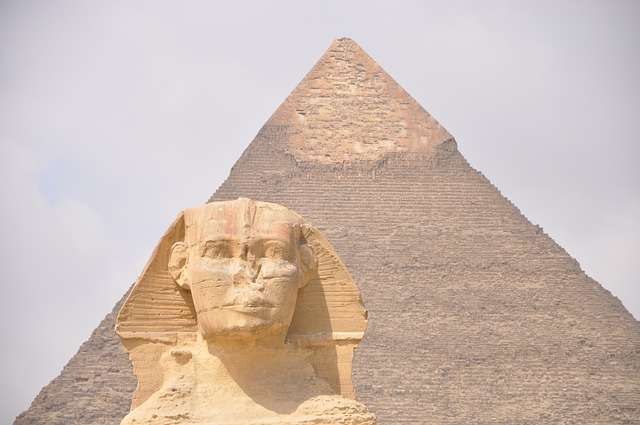
Cairo’s baseball history is unusual because the city appears in baseball’s global imagination before it had anything close to a domestic baseball culture. In the late nineteenth and early twentieth centuries, American baseball tours used Egypt as part of baseball’s wider international showcase. These events did not create an Egyptian baseball league, but they placed Cairo and the nearby pyramids inside baseball’s early global mythology.
One of the most important references is the 1888–1889 Spalding World Tour, when American baseball players traveled internationally to promote the game. Egypt became one of the most memorable stops because the players visited the pyramids and played exhibitions in a setting that linked baseball to ancient landmarks and international travel. Because Baseball, an organization involved in promoting baseball in Egypt, describes an 1889 tour stop in Egypt where American players explored ancient sites and played an exhibition game near the pyramids.
Another famous moment came in 1914, when the Chicago White Sox and New York Giants traveled internationally on a tour organized by Charles Comiskey and John McGraw. The American Baseball Coaches Association notes that the tour included Cairo and featured famous players such as Christy Mathewson, Tris Speaker, and Jim Thorpe.
These exhibitions are important, but they should not be overstated. They were not the beginning of a continuous Egyptian professional baseball system. They were part of baseball’s early international showmanship: American teams traveling abroad, presenting baseball as a cultural export, and staging games in famous locations. Cairo was a dramatic backdrop, not yet a baseball market.
Still, those visits matter because they show that Egypt was part of baseball’s global imagination very early. Long before modern international federations, Baseball5 tournaments, or Egyptian national teams, Cairo and the pyramids had already appeared in baseball’s travel history.
The Modern Baseball Structure in Cairo
Modern baseball in Cairo is more connected to federation development than to professional league history. The Egyptian Baseball & Softball Federation is listed by the World Baseball Softball Confederation with an address in Cairo, giving the city an administrative role in the country’s baseball-softball structure.
That matters because countries with small baseball scenes often develop through federations before they develop through large leagues. In established baseball nations, fans might start with clubs, schools, professional teams, or famous players. In emerging baseball countries, the national federation often becomes the main institution. It connects the sport to international bodies, organizes events, builds national teams, promotes youth participation, and keeps baseball-softball visible even when the domestic player base is limited.
Cairo’s role as Egypt’s capital also gives it practical importance. Government offices, national sports bodies, international schools, embassies, universities, and community organizations are often concentrated in or near the city. That makes Cairo a natural place for baseball-softball administration, outreach, and international contact.
The modern baseball scene in Cairo is not built around a professional club comparable to an MLB, NPB, KBO, CPBL, or Mexican League team. It is closer to a development network. Players may encounter the sport through local teams, clinics, federation activity, visiting coaches, international programs, schools, or Baseball5 events. That makes Cairo important not because it has a large baseball industry, but because it is one of the places where Egypt’s baseball infrastructure can be organized.
The gap between administrative structure and mass popularity is central to understanding Cairo baseball. Egypt has baseball institutions, but baseball remains a minor sport. The wider Egyptian sports landscape is dominated by football, with basketball, handball, volleyball, squash, combat sports, and Olympic sports also holding more public attention. Baseball has to grow through direct introduction, coaching, and participation rather than broad cultural familiarity.
Cairo, Baseball5, and the New Development Model
The strongest modern baseball-softball development story in Egypt may not be traditional nine-player baseball. It may be Baseball5. That matters for Cairo because Baseball5 is easier to introduce in urban environments where full baseball fields, equipment, and trained baseball coaches may be limited.
Baseball5 is a five-on-five version of baseball-softball promoted by the WBSC. It uses a smaller playing area and requires less equipment than traditional baseball or softball. For developing baseball countries, that can be a major advantage. It allows players to learn core bat-and-ball concepts, baserunning, fielding, throwing, catching, and team play without needing a full diamond.
Egypt has already staged Baseball5 events with Cairo teams involved. WBSC reported that Egypt held a Baseball5 National Championship in 2020, with Alexandria winning the boys’ tournament and Cairo earning first place in the girls’ tournament. WBSC also reported that Alexandria hosted Egypt’s first Baseball5 national event, where Giza won the men’s tournament and Cairo claimed first place in the women’s tournament.
Those results are more important than they may appear. They show that Cairo is not only an administrative location; it has also been part of competitive Baseball5 activity. The fact that Cairo appeared strongly on the girls’ and women’s side is especially useful for development. In countries where baseball is not already embedded in school and club culture, Baseball5 can help create a more accessible entry point for girls and women.
Baseball5 also fits Cairo’s urban reality better than traditional baseball. A full baseball diamond is large, specialized, and not easy to fit into dense city environments. Baseball5 can be played in school yards, gym spaces, paved courts, and smaller community settings. For a city like Cairo, that could make the difference between baseball being a difficult imported sport and baseball-softball becoming something young athletes can actually try.
Professional Baseball and the Limits of the Cairo Market
A professional baseball history of Cairo has to be honest: Cairo does not have a major professional baseball tradition. There is no long-running Cairo professional baseball club known across Africa or the Middle East. There is no major domestic league in Egypt with the visibility of the CPBL in Taiwan, NPB in Japan, KBO in South Korea, or the Mexican League. Cairo’s baseball importance is developmental rather than professional.
That does not make the city irrelevant. It means the professional/historical lens has to be adjusted. In Cairo, the “professional” story is less about established teams and more about the absence of a full professional structure. That absence helps explain what Egyptian baseball still needs: regular competition, more trained coaches, fields, equipment, youth pipelines, and international tournament opportunities.
Some baseball activity in Cairo has involved local adult teams and international visitors. Baseball International has advertised trips that include playing games in the Cairo area against local adult Egyptian baseball teams. This kind of activity is not the same as a professional league, but it shows that adult baseball exists in a form that can host visiting teams and participate in baseball exchange.
Cairo also benefits from the presence of international schools and expatriate communities. In many non-baseball countries, international schools help preserve baseball or softball activity because students, teachers, and families may come from countries where the sports are more familiar. That does not automatically create a national baseball culture, but it can provide fields, players, coaches, and visibility.
The challenge is converting that activity into a broader Egyptian player pathway. A few games, school programs, or visiting teams can introduce the sport, but sustainable baseball requires repetition. Players need regular seasons, age-group development, coaching continuity, umpiring, scorekeeping, equipment supply, and competitive goals.
Cairo and the Egyptian National Baseball Picture
Cairo’s baseball story also connects to Egypt’s national baseball and softball ambitions. Egypt is recognized inside the WBSC system through the Egyptian Baseball & Softball Federation, and Cairo is listed as the federation’s city. That gives Cairo a central place in the official national baseball structure.
For a country like Egypt, the national team is likely to be the most visible baseball product. Domestic club baseball may be limited, but national team activity can create goals for players and coaches. It also gives the country a way to appear in African, Arab, or global baseball-softball contexts.
Egypt’s place in African baseball is still developing. South Africa has historically had one of the continent’s stronger baseball programs, while countries such as Uganda, Kenya, Tanzania, Ghana, and others have appeared in different baseball-softball development contexts. Egypt’s large population and Cairo’s centrality give the country potential, but potential is not the same as established success.
Cairo can help because it has scale. A city of Cairo’s size has schools, universities, sports clubs, and youth populations large enough to support development if the right infrastructure exists. But scale alone does not build baseball. The sport needs a clear participation model. Baseball5 may be one of the most realistic models because it lowers barriers and can introduce baseball-softball concepts before traditional baseball fields become widely available.
Baseball Culture in Cairo
Baseball culture in Cairo is small and specialized. Most sports fans in the city are far more likely to follow football, especially Egyptian giants Al Ahly and Zamalek, than baseball. Handball, basketball, volleyball, squash, and other Olympic sports also have much clearer recognition. That means baseball in Cairo has to build from the ground up.
The first cultural challenge is familiarity. Baseball has rules, positions, rhythms, and terminology that are not intuitive to people who did not grow up around the game. Unlike football, which can be understood quickly by watching a few minutes, baseball often needs explanation: innings, outs, balls and strikes, force plays, baserunning, pitching changes, defensive positions, and scoring. That makes coaching and introductory formats especially important.
The second challenge is facilities. Baseball requires space. Cairo’s density makes traditional baseball harder to grow than smaller-format sports. Baseball5 helps address this, but traditional baseball still needs fields for players who want to move from introduction to full competition.
The third challenge is continuity. A sport can appear briefly through a clinic, a festival, or a visiting team, but culture develops only when people return to the sport repeatedly. Cairo baseball needs regular leagues, school programs, recurring tournaments, and visible teams that young players can identify with.
Even with those challenges, Cairo has advantages. It has population, institutions, international connections, media access, and the ability to host national-level events. If baseball and Baseball5 grow in Egypt, Cairo will almost certainly remain one of the central cities in that growth.
The Historical Symbolism of Playing Baseball in Cairo
One reason Cairo works as a baseball article subject is that the city has symbolic weight. Playing baseball near the pyramids, organizing Baseball5 in Egypt, or building a federation office in Cairo all carry a different feeling from introducing the sport in a smaller or less globally recognized place.
This symbolism has been part of baseball’s Egypt story for more than a century. American baseball visitors in the 1880s and 1910s were drawn to Egypt partly because it offered an unforgettable stage. Modern baseball promoters have continued to use Egypt’s history and landmarks as part of the story. MLB.com profiled Because Baseball in 2025, describing efforts to introduce baseball to Egyptian youth and bring baseball figures to Egypt.
The risk, of course, is that outsiders can turn Egypt into scenery rather than treating Egyptian baseball as a real local project. A serious Cairo baseball article should avoid that. The pyramids and old exhibition tours are interesting, but the future of baseball in Cairo depends on Egyptian players, Egyptian coaches, Egyptian schools, Egyptian clubs, and Egyptian federation work.
The best way to use Cairo’s symbolism is as a starting point, not the whole story. The city gives baseball an extraordinary historical setting, but the sport only matters locally if it creates real opportunities for people in Cairo and across Egypt to play.
The Future of Baseball in Cairo
The future of baseball in Cairo depends on practical development. The city needs more regular play, better coaching, accessible entry points, fields or adaptable playing spaces, youth programs, school partnerships, and visible national competition. Traditional baseball can grow, but Baseball5 may be the most efficient route for wider participation.
Cairo’s role will likely be administrative, educational, and developmental rather than professional in the near future. The city can serve as a center for federation planning, national events, Baseball5 tournaments, international visits, and youth outreach. If Egyptian baseball becomes stronger, Cairo will probably be one of the places where that progress is organized.
The long-term question is whether Cairo can move from baseball exposure to baseball continuity. Exposure means people see the sport once. Continuity means players return, teams form, coaches stay involved, and competitions repeat year after year. That is the difference between a baseball event and a baseball culture.
Cairo baseball is still closer to the beginning of that process than the end. It has historic exhibition value, federation presence, Baseball5 activity, adult team connections, and growing development possibilities. It does not yet have a major professional baseball identity. But for a worldwide baseball site, Cairo is worth covering because it shows how baseball’s global map is built in stages: first through contact, then through organization, then through participation, and only later through deeper culture.
Interested in Sports in Cairo (Egypt)?
American Football in Cairo | Basketball in Cairo | Cricket in Cairo | Football (Soccer) in Cairo | Hockey in Cairo