
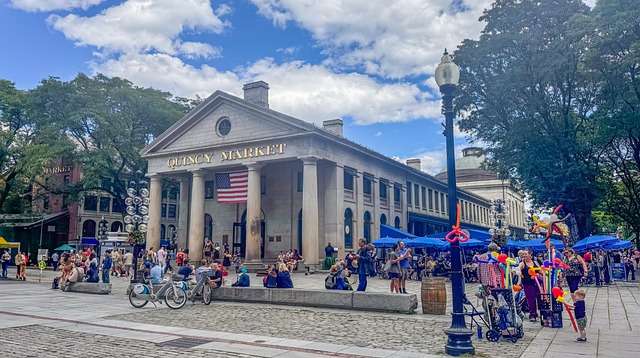
Boston remains one of the most powerful baseball cities in the world, and the current state of the sport reflects that intensity. Boston is one of the oldest and most important professional baseball cities in the United States. Its baseball history reaches back to the beginning of organized professional baseball, includes one of the sport’s earliest great franchises, produced one of the most famous ballparks in the world, and helped shape how American cities came to identify with professional teams. Boston baseball is not only the story of the Red Sox. It is also the story of the old Boston Red Stockings, the National League Braves, Fenway Park, Braves Field, Black baseball in New England, college and amateur baseball, and one of the most intense regional sports cultures in North America.
For much of the early twentieth century, Boston was a two-team Major League city. The American League Red Sox and the National League Braves both played in Boston, giving the city a baseball identity that was broader than the modern Red Sox-centered version. The Braves eventually moved to Milwaukee in 1953, but their long Boston history still matters. Before the Braves left, Boston had already played a central role in professional baseball’s rise from a young organized sport into a major American institution.
The First Professional Baseball City
Boston’s professional baseball history begins in the early 1870s, when the Boston Red Stockings joined the National Association of Professional Base Ball Players. The club began play in 1871 and became one of the most important teams in the early professional game. SABR’s history of the 1871 club notes that Boston played an exhibition game on April 6, 1871, described as the first professional baseball game played in Boston.
The Red Stockings were built around figures who had already helped make professional baseball visible. Harry Wright, one of the sport’s most important early organizers, managed the team and brought with him the credibility of the earlier Cincinnati Red Stockings. The Boston club became a founding force in organized professional baseball, and its early success helped establish the city as a serious baseball market.
This early Boston franchise later became part of the National League, which was founded in 1876. The continuity from the Boston Red Stockings to the later Boston Braves and, eventually, the Atlanta Braves makes the franchise one of the oldest continuous professional baseball lines in the sport. The team’s Boston roots are therefore not a side story. They are part of the foundation of Major League Baseball itself.
Boston’s early baseball culture also fit the city’s broader nineteenth-century identity. It was a city of newspapers, colleges, neighborhoods, workers, immigrants, and civic pride. Baseball gave those communities a shared public stage. The game was modern enough to feel urban and organized, but simple enough to spread through clubs, parks, schools, and local associations.
The National League Braves and the Older Boston Baseball Tradition
The franchise best known today as the Atlanta Braves spent more than eight decades in Boston. During that time, it played under several names, including the Red Stockings, Red Caps, Beaneaters, Doves, Rustlers, Braves, Bees, and again Braves. That naming history can be confusing, but the broader point is clear: Boston’s National League club was one of baseball’s foundational franchises.
The Boston Braves were not always the city’s most popular team, especially after the Red Sox became established in the American League, but the Braves had deep roots. They played at the South End Grounds for much of their early history before moving into Braves Field in 1915. Braves Field was one of the largest ballparks of its era and represented a major investment in Boston’s National League future.
The Braves also had moments of glory. The 1914 “Miracle Braves” remain one of baseball’s most famous turnaround teams. After sitting in last place in July, they surged to win the National League pennant and then swept the heavily favored Philadelphia Athletics in the World Series. That championship gave the Braves one of the most dramatic seasons in early twentieth-century baseball history.
The Braves also won the National League pennant in 1948 behind stars such as Warren Spahn and Johnny Sain. The phrase “Spahn and Sain and pray for rain” became one of baseball’s classic expressions, reflecting both the strength of the team’s top pitchers and the thinness of the roster behind them. The 1948 Braves lost the World Series to the Cleveland Indians, but their pennant showed that Boston’s National League club still had competitive life after World War II.
The problem was that Boston could not indefinitely sustain two Major League teams at equal strength. The Red Sox had Fenway Park, a growing American League identity, and a powerful hold on the city’s fan base. The Braves struggled with attendance and market position. In March 1953, owner Lou Perini moved the Braves to Milwaukee, ending Boston’s two-team MLB era. The Baseball Hall of Fame describes the move as a turning point that “shook baseball’s world,” because MLB had gone 50 seasons with 16 teams in 10 cities before the Braves relocated.
The Red Sox and the Rise of Fenway Park
The Boston Red Sox began play in 1901 as one of the American League’s original franchises. In the early years, the team was often called the Boston Americans before the Red Sox name became established. The club quickly became one of the strongest teams in the young American League, winning the first modern World Series in 1903 by defeating the Pittsburgh Pirates.
The Red Sox were a powerhouse in the 1910s. With stars such as Tris Speaker, Smoky Joe Wood, Harry Hooper, and later Babe Ruth, Boston won multiple World Series titles before 1920. Ruth began his career as a dominant left-handed pitcher with the Red Sox before becoming the home run-hitting figure who changed the sport’s offensive imagination. His sale to the New York Yankees after the 1919 season became one of the most famous transactions in baseball history.
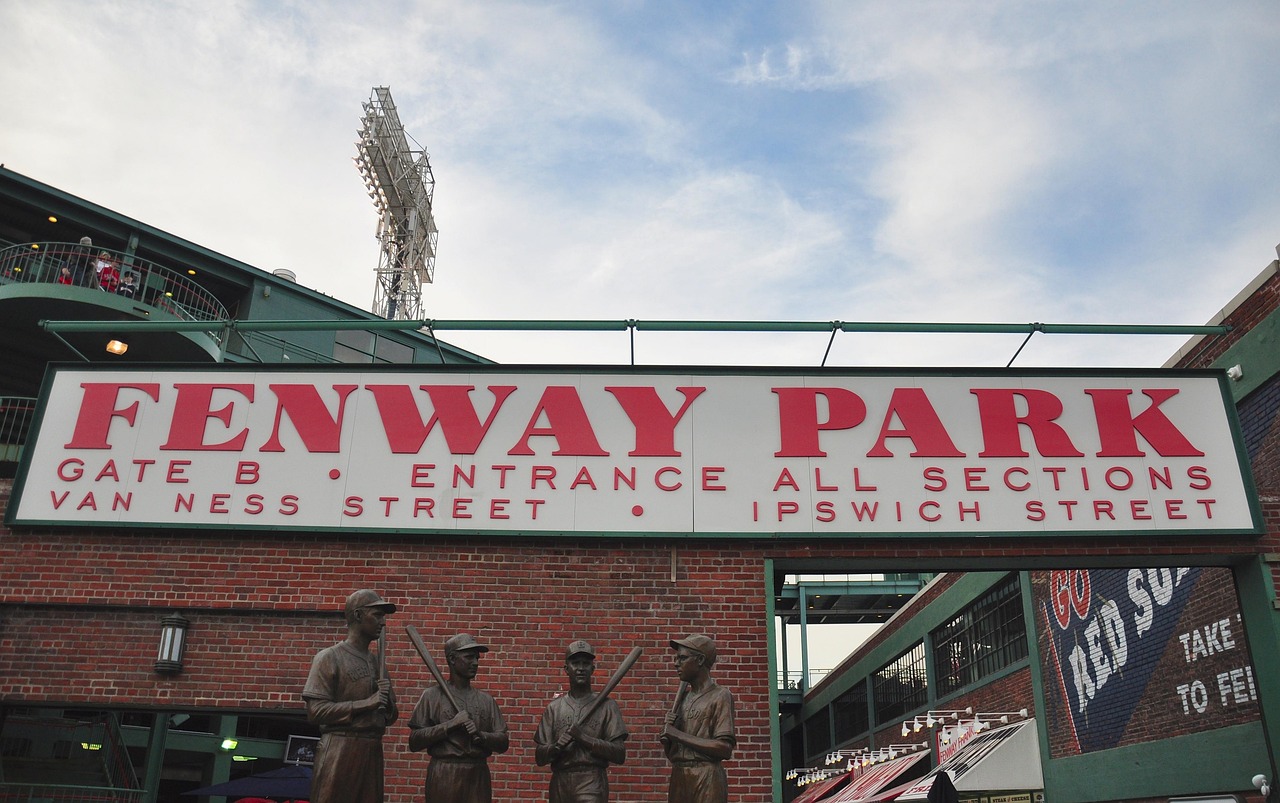
Fenway Park opened in 1912 and became the permanent center of Boston’s baseball identity. Its left-field wall, later known as the Green Monster, its tight urban footprint, its irregular dimensions, and its location inside the Fenway neighborhood turned the ballpark into one of baseball’s most recognizable places. The Red Sox won the 1912 World Series in Fenway’s first season, helping connect the new park immediately to championship history.
For much of the twentieth century, Fenway became a stage for both greatness and frustration. Ted Williams made it his home as one of the greatest hitters in baseball history. Carl Yastrzemski, Jim Rice, Carlton Fisk, Dwight Evans, Pedro Martínez, David Ortiz, Manny Ramirez, Nomar Garciaparra, Dustin Pedroia, Mookie Betts, and many others later added layers to Fenway’s history. The park became not only a venue but a memory machine. Fans could connect generations of players, games, heartbreaks, and celebrations to the same physical space.
Black Baseball, Segregation, and Boston’s Complicated Record
Boston baseball history also includes Black baseball and the city’s complicated relationship with integration. During the segregated era, Black baseball existed in Boston through semi-professional teams, touring clubs, local leagues, and regional competition. The Boston Royal Giants were one of the city’s known Black baseball teams, and accounts of the team connect Boston to a wider New England Black baseball circuit. The Bay State Banner’s history notes that Negro League veteran Danny McClellan organized a Boston-based team in 1923 from a club that had been playing as the Quaker Giants.
Black baseball in Boston did not have the same national profile as the Negro league centers in Kansas City, Chicago, Pittsburgh, Philadelphia, New York, or Baltimore, but it was still meaningful. Teams such as the Boston Royal Giants played in parks around the region and connected Boston to Black baseball talent that was excluded from the white major leagues.
Boston’s Major League integration record is more difficult. The Red Sox were the last MLB team to integrate, adding Pumpsie Green in 1959, more than a decade after Jackie Robinson debuted with the Brooklyn Dodgers. That delay remains a major part of the franchise’s history. Boston’s baseball memory cannot be limited to Fenway romance and Red Sox mythology. It also includes exclusion, missed opportunities, and the long struggle to make professional baseball more representative.
The city’s Black baseball legacy is therefore essential to a serious Boston baseball article. It shows that the game existed beyond the two white Major League clubs and that talented Black players and teams were part of the region’s baseball life even when the major leagues denied them full access.
The Braves Leave and the Red Sox Become Boston’s Baseball Center
The Braves’ move to Milwaukee in 1953 changed Boston baseball permanently. Before that, the city had two Major League histories running at once. After the move, the Red Sox became Boston’s only MLB team, and Fenway Park became the city’s singular Major League baseball landmark.
That shift helped simplify Boston’s baseball identity, but it also narrowed public memory. The Red Sox became the dominant narrative, while the Braves’ Boston history slowly became more obscure. Yet the Braves’ departure also represented a broader change in Major League Baseball. Franchise relocation became part of the sport’s modern business model. The Braves moved from Boston to Milwaukee, later from Milwaukee to Atlanta, and helped open the era of geographic expansion and relocation. MLB was no longer a fixed map of old northeastern and midwestern cities.
For the Red Sox, the post-Braves era brought decades of intense loyalty and repeated disappointment. The team reached the 1967 World Series behind Carl Yastrzemski and the “Impossible Dream” season, then lost to the St. Louis Cardinals. They reached the 1975 World Series, produced Carlton Fisk’s iconic home run in Game 6, and still lost to the Cincinnati Reds. They reached the 1986 World Series and suffered one of the sport’s most painful defeats against the New York Mets.
Those losses helped create the modern Red Sox emotional identity. Boston baseball became associated with loyalty, bitterness, fatalism, and historical weight. The “Curse of the Bambino” narrative became a national shorthand for the franchise’s failure to win a World Series after selling Babe Ruth. The phrase oversimplified many decades of baseball, but it became powerful because it gave fans a story that linked every near-miss to a single historical wound.
2004 and the Remaking of Boston Baseball Memory
The 2004 Red Sox changed the city’s baseball identity. After trailing the New York Yankees three games to none in the American League Championship Series, Boston won four straight games to complete the most famous comeback in baseball postseason history. The Red Sox then swept the St. Louis Cardinals in the World Series, winning their first championship since 1918.
That title did more than end a drought. It changed the emotional structure of Red Sox fandom. Boston baseball was no longer defined only by suffering, curses, and near-misses. The 2004 team gave the city a modern championship foundation, and the Red Sox followed with additional World Series titles in 2007, 2013, and 2018.
The 2013 championship was especially tied to the city itself because it came after the Boston Marathon bombing. Fenway Park became a civic gathering place, and the team’s run carried a larger emotional meaning for many fans. David Ortiz’s role in that season strengthened his place as one of the most important figures in Boston sports history.
The 2018 Red Sox then produced one of the strongest seasons in franchise history, winning 108 regular-season games and the World Series. By that point, Boston baseball had moved from curse mythology into an era of repeated success. The Red Sox were no longer simply the tragic counterweight to the Yankees. They were a modern championship organization with a global brand.
Boston’s Baseball Geography and Regional Reach
Boston baseball does not stop at the city limits. The Red Sox are the dominant baseball team across most of New England. Massachusetts, Maine, New Hampshire, Vermont, Rhode Island, and much of Connecticut have long been part of Red Sox territory, though Connecticut is split by Yankees, Mets, and Red Sox loyalties. This regional reach gives Boston baseball a larger identity than a single city market.
Minor league baseball has also mattered across the region. The Pawtucket Red Sox in Rhode Island were long associated with the Red Sox system before the franchise moved to Worcester as the Worcester Red Sox. Portland, Maine; Manchester, New Hampshire; and other New England cities have also supported minor league baseball. These teams extend Boston’s baseball culture into smaller markets and give fans local access to professional baseball.
College baseball and amateur baseball also contribute to the ecosystem. Boston College, Northeastern, Harvard, Boston University’s historical baseball footprint, and many smaller New England programs add to the region’s player-development and baseball identity. The Cape Cod Baseball League, while outside Boston proper, is also part of the broader Massachusetts baseball world and one of the most important summer collegiate leagues in the country.
Boston’s baseball geography is therefore layered. Fenway Park is the center, but the network includes minor league affiliates, college programs, summer leagues, local diamonds, high school baseball, and regional fan loyalties.
Why Boston Baseball Still Matters
Boston baseball matters because it contains so much of American baseball history in one place. It includes the early professional game, the roots of the Braves franchise, the rise of the American League, Fenway Park, Babe Ruth, Ted Williams, the loss of the Braves, Black baseball memory, delayed integration, the Yankees rivalry, postseason heartbreak, and modern championship redemption.
Few cities have a baseball history as old or as emotionally dense. Boston’s baseball story is not perfect, and it should not be flattened into nostalgia. It includes exclusion and relocation alongside tradition and triumph. It includes the Red Sox and the Braves, Fenway and Braves Field, the Royal Giants and the Major League clubs, old professional baseball and modern analytics-era championships.
That is why Boston works so well as a deep-dive baseball article. The city is not only a place where baseball is popular. It is one of the places where professional baseball became itself. From the 1871 Red Stockings to the modern Red Sox, Boston has been part of the sport’s structure, mythology, conflict, and memory for more than 150 years.



Interested in Sports in Boston?
American Football in Boston | Basketball in Boston | Cricket in Boston | Football (Soccer) in Boston | Hockey in Boston | Rugby in Boston