
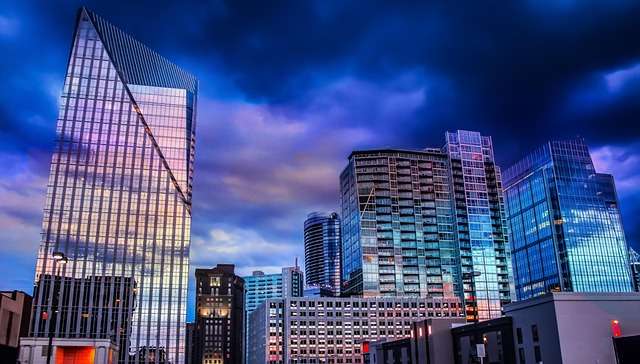
Atlanta is one of the strongest baseball metros in the United States right now. Atlanta baseball has a long professional history that began well before the Braves arrived from Milwaukee in 1966. The city’s baseball story includes the Atlanta Crackers, the Atlanta Black Crackers, Ponce de Leon Park, the arrival of Major League Baseball, Hank Aaron’s 715th home run, Ted Turner’s national television experiment, the 1990s Braves dynasty, Turner Field, Truist Park, and the modern stadium district at The Battery Atlanta.
That makes Atlanta different from many baseball cities. It was not an original major league city like Boston, Chicago, New York, Philadelphia, St. Louis, or Cincinnati. It became a major league city in the modern expansion and relocation era. But Atlanta also had decades of professional baseball before MLB arrived, and those earlier teams shaped the city’s baseball identity. To understand Atlanta baseball, the Braves matter most today, but the story does not begin with the Braves.
The Atlanta Crackers and the City’s Minor League Foundation
Before the Braves, the Atlanta Crackers were the city’s main professional baseball team. The Crackers played as Atlanta’s home team between 1901 and 1965, making them the central baseball institution in the city for more than six decades. Their history belongs mostly to the Southern Association, one of the most important minor league circuits in the American South. (crackerbaseball.com)
The Crackers mattered because they gave Atlanta a professional baseball identity before the city had major league sports. In the first half of the twentieth century, minor league baseball was not just a developmental system in the modern sense. It was local professional baseball. Fans followed the Crackers because they were Atlanta’s team, not simply because they were a stepping stone to something else.
The team played at Ponce de Leon Park, one of the most important ballparks in Atlanta baseball history. Ponce de Leon Park was located in Midtown Atlanta, near the old Ponce de Leon amusement park area, and became a central gathering place for baseball in the city. The park is remembered for its magnolia tree in deep center field, a feature that gave the ballpark a distinctive local character.
The Crackers were successful and popular in their era. They won Southern Association titles, developed players, and helped make baseball part of Atlanta’s civic life. The team’s identity also reflected the segregated structure of Southern sport. White fans and Black fans did not experience professional baseball in the same way, and Atlanta’s baseball culture was divided by race, access, and opportunity.
That history matters because the Crackers were both a beloved local institution and part of a segregated sports system. Their story cannot be separated from the parallel story of Black baseball in Atlanta. The city had professional baseball before the Braves, but it had more than one baseball world.
The Atlanta Black Crackers and Negro League Baseball
The Atlanta Black Crackers were the city’s most important Negro league team. They began as the Atlanta Cubs in 1919, according to the Atlanta History Center, before adopting the Black Crackers name by the end of their first season. The team drew players from local Black colleges and universities, including Morris Brown College and Morehouse College, as well as from Atlanta’s local baseball community. (atlantahistorycenter.com)
The Black Crackers played at Ponce de Leon Park and represented a different side of Atlanta baseball. They existed in a sports world shaped by segregation, limited resources, unstable league structures, and unequal access to money, facilities, and recognition. MLB’s Negro Leagues history page describes the Black Crackers as a team with a story of competitiveness and struggle, noting that they eventually joined the Negro American League in 1938, though only for one season. (mlb.com)
The 1938 season was the Black Crackers’ high point. SABR notes that the team joined the Negro American League that year and won the second-half championship before the postseason series against the Memphis Red Sox was disrupted by financial and logistical disputes. (sabr.org) That moment shows both the quality of the team and the instability that often surrounded Negro league operations.
The Black Crackers are essential to Atlanta baseball history because they show that the city’s baseball past was not only the story of the white minor leagues. Black players, Black fans, Black colleges, and Black communities built their own baseball institutions in a city where segregation shaped nearly every part of public life.
The Braves have occasionally honored the Black Crackers through throwback uniforms, and MLB’s broader recognition of Negro league history has brought renewed attention to teams like Atlanta’s. But the Black Crackers should not be treated as a side note. They were part of the city’s professional baseball ecosystem, and their story belongs beside the Crackers, Braves, and modern stadium history.
Atlanta Becomes a Major League City
Atlanta became a Major League Baseball city when the Braves moved from Milwaukee for the 1966 season. The move was part of a larger transformation in Atlanta’s civic identity. During the 1960s, the city was positioning itself as the leading business and transportation hub of the New South. Bringing major league sports to Atlanta fit that project.
The Braves’ move was officially pursued in the mid-1960s. Materials from the Ivan Allen Jr. mayoral records show that on October 20, 1964, Mayor Allen’s office announced that the Milwaukee Braves had petitioned the National League to move to Atlanta. (gatech.edu) The relocation itself took effect in 1966, making Atlanta one of the first major league sports cities in the Deep South.
The Braves’ first Atlanta home was Atlanta Stadium, later known as Atlanta-Fulton County Stadium. The ballpark opened before the Braves arrived and was built partly to help attract a major league franchise. Its existence showed that Atlanta was not just waiting passively for MLB. The city made a deliberate pitch to join the major league sports map.
The early Atlanta Braves gave the city immediate star power. Hank Aaron, Eddie Mathews, Joe Torre, Felipe Alou, Rico Carty, Phil Niekro, and other players helped connect the new franchise to both Atlanta and the Braves’ longer history in Boston and Milwaukee. Aaron became the central figure. His pursuit of Babe Ruth’s home run record made Atlanta one of the central baseball stages of the early 1970s.
On April 8, 1974, Hank Aaron hit his 715th career home run at Atlanta-Fulton County Stadium, breaking Babe Ruth’s long-standing MLB record. That moment remains the most famous single event in Atlanta baseball history. It was not just a sports milestone. Aaron broke the record while facing racist threats and enormous public pressure, making the achievement one of the defining moments in American sports history.
Atlanta-Fulton County Stadium later became the site of the Braves’ first Atlanta-era World Series title in 1995. The Braves’ own ballpark history notes that Atlanta-Fulton County Stadium hosted one World Series title, four pennants, and seven division championships before it was demolished in 1997. (mlb.com)
Ted Turner, Television, and “America’s Team”
The Braves’ early Atlanta years were uneven on the field, but the franchise became nationally famous through television. Ted Turner bought the Braves in the 1970s and used his Atlanta-based television station to broadcast games to a national cable audience. That decision changed the franchise’s identity.
The Braves became known as “America’s Team” not because they were winning championships every year, but because they were available to watch across the country. WTBS carried Braves games into homes far beyond Georgia. For baseball fans in places without a local MLB team, especially across the South and in rural areas, the Braves became familiar because they were always on television.
This mattered enormously for Atlanta baseball. The Braves were not only Atlanta’s MLB team. They became the default baseball team for much of the Southeast. In an era before every game was available through streaming packages, television reach could create regional loyalty. The Braves built a fan base that stretched from Georgia into Alabama, South Carolina, Tennessee, Mississippi, North Carolina, Florida, and beyond.
Turner’s ownership also connected baseball to Atlanta’s rise as a media city. Atlanta was no longer just a transportation and corporate center. It was becoming a cable television capital, and the Braves were part of that development. The team’s national visibility helped Atlanta baseball escape the limits of local attendance and regional newspaper coverage.
On the field, however, the Braves often struggled in the late 1970s and much of the 1980s. The franchise had memorable players, including Dale Murphy, who became one of the most beloved figures in Braves history, but the team did not become a consistent winner until the 1990s. That contrast is important: Atlanta baseball became nationally familiar before it became nationally dominant.
The 1990s Braves and Atlanta’s Dynasty Era
The 1990s transformed Atlanta baseball. The Braves went from a struggling franchise to one of the most successful teams in modern MLB history. Under general manager John Schuerholz and manager Bobby Cox, Atlanta built a roster around elite pitching, strong player development, smart trades, and a core that could compete year after year.
The pitching staff became the foundation. Greg Maddux, Tom Glavine, John Smoltz, and Steve Avery gave the Braves one of the most famous rotations in baseball history. Maddux, Glavine, and Smoltz all later reached the Baseball Hall of Fame. Their dominance made Atlanta a model for how run prevention, command, scouting, and development could anchor a franchise.
The lineup had its own stars. Chipper Jones became the face of the franchise for a generation. Andruw Jones emerged as one of the greatest defensive center fielders in baseball history. Fred McGriff, David Justice, Javy López, Ryan Klesko, Marquis Grissom, Terry Pendleton, Rafael Furcal, and others played important roles during the long run of success.
The Braves won the 1995 World Series, defeating Cleveland and giving Atlanta its first major professional sports championship. That title remains central to the city’s baseball memory. It validated the dynasty and gave Atlanta-Fulton County Stadium one final defining moment before the Braves moved across the street to Turner Field.
The Braves’ dominance was not limited to one season. The franchise won division titles year after year through the 1990s and early 2000s. That consistency made Atlanta one of MLB’s defining organizations. Fans across the country knew the pattern: the Braves would pitch, defend, develop players, win the division, and enter October as a serious threat.
The postseason record created some frustration because the Braves won only one World Series during that long run. But the broader achievement remains exceptional. Few franchises in modern baseball have sustained that level of regular-season success over so many seasons.
Turner Field and the Olympic Baseball City
Turner Field opened as the Braves’ home in 1997 after being converted from Centennial Olympic Stadium, the main venue for the 1996 Summer Olympics. That gave Atlanta one of the more unusual stadium transitions in baseball history. The city used its Olympic infrastructure to create a new MLB ballpark, and the Braves moved less than a block from Atlanta-Fulton County Stadium.
Turner Field represented a new stage for Atlanta baseball. It was more modern than Atlanta-Fulton County Stadium and opened during the Braves’ division-dominance era. The National Baseball Hall of Fame notes that in 20 seasons at Turner Field, the Braves had fifteen winning seasons, twelve postseason appearances, ten first-place finishes, and five 100-win seasons. (baseballhall.org)
The ballpark hosted the 1999 World Series, the 2000 MLB All-Star Game, multiple postseason series, and many of the most important seasons in the careers of Chipper Jones, Andruw Jones, John Smoltz, Tom Glavine, Greg Maddux, and later stars such as Brian McCann, Freddie Freeman, Jason Heyward, Craig Kimbrel, and Julio Teherán.
Turner Field also carried the memory of Atlanta-Fulton County Stadium. The old stadium site became a parking lot, but the location of Hank Aaron’s 715th home run was preserved with a marker and a section of wall. MLB’s Braves history notes that after the Braves moved to Turner Field, Atlanta-Fulton County Stadium was demolished and the site became parking, while a monument continued to mark where Aaron’s historic home run landed. (mlb.com)
The Braves left Turner Field after the 2016 season, even though the stadium was not especially old. That move was controversial because it shifted the franchise from the city of Atlanta to Cobb County. The Braves argued that the new location better matched their fan base and allowed for a larger mixed-use development around the stadium. The move changed the geography of Atlanta baseball.
Truist Park, The Battery, and the Modern Braves
The Braves opened their new ballpark in 2017, first known as SunTrust Park and now called Truist Park. The stadium is located in Cobb County, northwest of downtown Atlanta, and is connected to The Battery Atlanta, a mixed-use district with restaurants, offices, apartments, retail, hotels, and entertainment spaces.
This changed the business model of Atlanta baseball. The Braves were no longer only operating a stadium. They were operating a year-round real estate and entertainment district around the stadium. The Battery has become one of the most discussed stadium-adjacent developments in American sports, influencing how other franchises think about ballparks, land, and revenue.
On the field, Truist Park quickly became tied to a new championship era. The Braves won the 2021 World Series, defeating the Houston Astros and giving Atlanta its second World Series title since the franchise moved south. That championship carried a different feel from 1995. The 1995 title belonged to the Maddux-Glavine-Smoltz-Chipper era. The 2021 title belonged to Freddie Freeman, Ozzie Albies, Austin Riley, Max Fried, Dansby Swanson, Jorge Soler, Eddie Rosario, Charlie Morton, Ian Anderson, and a retooled roster that survived major injuries and midseason uncertainty.
The modern Braves have also built around a new core led by Ronald Acuña Jr., Ozzie Albies, Austin Riley, Matt Olson, Spencer Strider, Michael Harris II, and others. Their identity combines player development, long-term contracts, power hitting, advanced pitching, and a strong organizational culture.
Truist Park has also returned Atlanta to major MLB event hosting. MLB announced that Truist Park would host the 2025 All-Star Game, making it the third All-Star Game in the Atlanta area after the 1972 game at Atlanta Stadium and the 2000 game at Turner Field. (as.com)
Atlanta’s Place in Baseball History
Atlanta baseball is best understood as a layered history. The Crackers gave the city a white minor league institution. The Black Crackers carried the city’s Negro league history. Ponce de Leon Park gave Atlanta one of its great early baseball spaces. The Braves made Atlanta a major league city. Hank Aaron made Atlanta the site of one of baseball’s most important records. Ted Turner made the Braves a national television team. The 1990s dynasty made Atlanta a model franchise. Turner Field linked baseball to the Olympics. Truist Park and The Battery made the Braves a modern sports-business case study.
That combination gives Atlanta a rare baseball identity. The city is not just a Braves market, even though the Braves dominate the modern story. It is a former minor league capital, a Negro league city, a New South relocation city, a national cable baseball city, a dynasty city, and a modern stadium-development city.
Atlanta’s baseball history also mirrors the city’s wider history. It includes segregation and Black sporting excellence, civic ambition and regional growth, downtown stadium building and suburban relocation, national media reach and local fan identity. Few baseball cities have changed roles as many times.
For a worldwide baseball site, Atlanta deserves a deep professional and historical treatment because it sits at the intersection of several major baseball themes: the minor league South, Negro league history, franchise relocation, television expansion, superstar record-breaking, dynasty-building, and the modern ballpark economy.
Atlanta baseball began long before the Braves arrived. But the Braves turned the city into one of the defining baseball places in the United States. Today, the city’s baseball identity stretches from the old grounds of Ponce de Leon Park to Hank Aaron Drive, from Turner Field memories to Truist Park crowds, and from the Black Crackers to the modern Braves. It is a baseball history built through change, ambition, and reinvention.

Interested in Sports in Atlanta?
American Football in Atlanta | Basketball in Atlanta | Cricket in Atlanta | Football (Soccer) in Atlanta | Hockey in Atlanta | Rugby in Atlanta