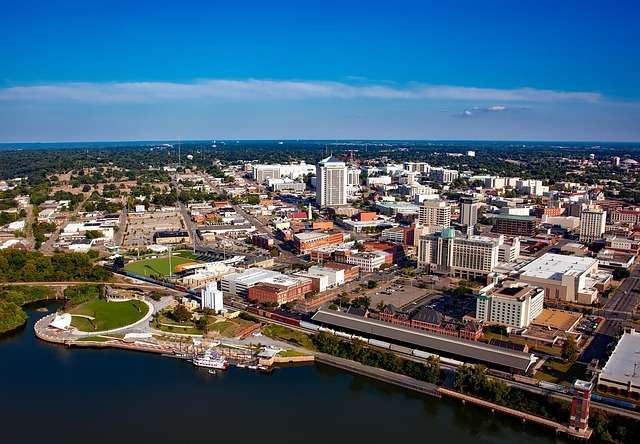
Alabama’s baseball culture is thriving, with strong high-school programs, well-organized travel circuits, and a long-standing connection to college baseball. Alabama baseball is not just a state-level version of America’s pastime. It is one of the richest historical baseball landscapes in the United States, especially when the story is told through professional baseball, the Negro leagues, minor league towns, and the players who carried Alabama’s baseball identity into the national record. The state does not have a Major League Baseball franchise, but that absence can make its baseball history easy to misunderstand. Alabama’s importance is not built around one MLB club. It is built around Birmingham, Mobile, Montgomery, Huntsville, Rickwood Field, the Birmingham Black Barons, the Birmingham Barons, the Southern League, and a remarkable list of Alabama-born baseball legends.
The state’s baseball history also reflects the larger history of the South. Alabama baseball developed through segregation, industrial cities, barnstorming teams, Black baseball institutions, minor league clubs, college programs, and community diamonds. It produced some of the greatest players the sport has ever known, including Willie Mays, Hank Aaron, Satchel Paige, Billy Williams, Willie McCovey, Ozzie Smith, Don Sutton, Early Wynn, Joe Sewell, Monte Irvin, and others. Alabama’s baseball story is therefore not a side note to major league history. It is one of the places where major league history, Negro leagues history, and Southern baseball culture meet.
Rickwood Field and the Roots of Professional Baseball in Alabama
Any serious history of Alabama baseball has to begin with Birmingham and Rickwood Field. Opened in 1910, Rickwood Field is widely recognized as the oldest professional baseball park still standing in the United States. MLB’s own description of Rickwood traces its origin to Birmingham industrialist A.H. “Rick” Woodward, who bought a controlling interest in the city’s professional team and built the ballpark as a modern home for the Birmingham Barons.
Rickwood Field became more than a stadium. It became Alabama’s most important baseball monument. It hosted the Birmingham Barons, the Birmingham Black Barons, barnstorming major leaguers, Negro leagues stars, minor league teams, exhibitions, and generations of local baseball memories. The National Baseball Hall of Fame notes that Rickwood dates to 1910 and predates Fenway Park and Wrigley Field, while also identifying it as one of the few surviving former Negro leagues ballparks.
The Birmingham Barons helped define white professional baseball in Alabama for much of the twentieth century. The club’s roots go back to the Southern Association era, when minor league baseball was a major sporting attraction across the South. Before television, air travel, and the modern MLB media system reshaped the game, minor league teams were civic institutions. A city like Birmingham did not need a major league club to have a meaningful baseball identity. The Barons gave the city a team to follow, a ballpark to attend, and a professional connection to the wider baseball world.
Rickwood also created a rare physical link between different baseball worlds. It was used by the white Barons and the Black Barons, which means the same field hosted both segregated professional baseball and Negro leagues greatness. That double history gives Rickwood a power that many preserved ballparks do not have. It is not only old. It is historically layered.
The Birmingham Black Barons and Alabama’s Negro Leagues Legacy
The Birmingham Black Barons are central to Alabama baseball history. Organized in 1920 as the Birmingham Stars, they became one of the original teams associated with the Negro Southern League, according to the City of Birmingham’s Negro Southern League Museum. The club later became one of the most important Negro leagues teams in the South.
The Black Barons played at Rickwood Field when the white Barons were away, a system that reflected the segregation of the era while also placing Black baseball excellence inside the city’s most important baseball venue. Rickwood’s own history explains that the Black Barons were formed primarily from the Black company team at ACIPCO and rented the ballpark on dates when the Barons were on the road.
The Black Barons were not merely a symbolic team. MLB’s Negro leagues history project notes that the club operated for 26 years and won three Negro American League titles between 1943 and 1948, though it lost to the Homestead Grays in the Negro World Series each time. That record places Birmingham inside the competitive history of Black professional baseball, not just its cultural memory.
The Black Barons also connect Alabama directly to Willie Mays. Mays, born in Westfield, Alabama, began his professional career with the Birmingham Black Barons as a teenager before becoming one of the greatest players in baseball history. That connection became nationally visible again when MLB staged its 2024 Rickwood Field game between the San Francisco Giants and St. Louis Cardinals to honor the Negro leagues and the memory of Mays. The Associated Press described Rickwood as the oldest professional ballpark in the United States and emphasized its meaning as both a site of opportunity and oppression.
Alabama’s Negro leagues history also includes Satchel Paige, born in Mobile, one of the most famous pitchers in baseball history. Paige’s career stretched across the Negro leagues, barnstorming baseball, Latin American baseball, and eventually Major League Baseball after integration. The National Baseball Hall of Fame identifies Paige as born in Mobile and notes that he began his professional career in the Negro leagues in the 1920s.
That combination — Mays, Paige, Rickwood, the Black Barons, and Birmingham’s Negro leagues institutions — gives Alabama one of the strongest Black baseball histories in the country.
Minor League Baseball and Alabama’s Professional Cities
Alabama’s professional baseball identity has always been a minor league identity. That is not a downgrade. In much of the South, minor league baseball carried professional baseball culture long before major league expansion reached places like Atlanta, Houston, Arlington, Miami, or Tampa Bay.
Birmingham remains the central city in this story, but it is not alone. Montgomery, Huntsville, Madison, Mobile, and other Alabama communities have all been part of the professional baseball map. The modern state footprint includes the Birmingham Barons, Montgomery Biscuits, and Rocket City Trash Pandas, all connected to Double-A baseball. The Southern League’s current team map includes the Birmingham Barons, Montgomery Biscuits, and Rocket City Trash Pandas among its clubs.
The Birmingham Barons are the historic anchor. Their long connection to Rickwood Field, their Southern Association history, their later Southern League presence, and their modern home at Regions Field all make them one of the most important minor league franchises in the South. The Barons also became part of wider sports culture when Michael Jordan played for the team in 1994 during his baseball experiment, but the franchise’s significance does not depend on that novelty. Its deeper importance is continuity.
The Montgomery Biscuits represent a newer era of minor league baseball branding and ballpark development. Established in 2004 and beginning play in 2005, the Biscuits helped bring high-level affiliated baseball to Alabama’s capital city in a modern downtown-ballpark format. Minor League Baseball’s overview of the Double-A South identified the Biscuits as one of the older clubs in that grouping, established in 2005.
The Rocket City Trash Pandas, based in Madison near Huntsville, represent another modern chapter. Their arrival gave northern Alabama a major affiliated baseball presence tied to one of the state’s fastest-growing regions. The team’s identity also reflects the current era of minor league branding, where local culture, merchandise, and entertainment are central to the club’s appeal.
Mobile’s baseball history is different because the city lost its affiliated team. The Mobile BayBears played in the Southern League before relocating, but Mobile remains one of the most important baseball cities in Alabama because of its player production. A state baseball map that ignores Mobile because it no longer has an affiliated team would miss one of Alabama’s deepest baseball centers.
Together, these cities show why Alabama baseball is best understood through a professional network rather than one franchise. Birmingham preserves the oldest and deepest professional memory. Montgomery represents the capital’s modern minor league identity. Huntsville/Madison represents growth and new-market baseball. Mobile represents historic player production and lost affiliated baseball memory.
Alabama’s Hall of Fame-Level Player Legacy
Alabama’s player legacy is extraordinary. Few states without a major league franchise can match its list of baseball icons. Baseball-Reference’s state-by-birthplace page for Alabama includes Willie Mays, Satchel Paige, Hank Aaron, Billy Williams, Willie McCovey, Don Sutton, Early Wynn, Ozzie Smith, Joe Sewell, and many other major leaguers connected to the state.
The most famous names are overwhelming. Willie Mays, born in Westfield, is one of the greatest all-around players in baseball history. Hank Aaron, born in Mobile, became one of the defining figures in the history of the home run, the Atlanta Braves, and baseball’s integration era. Satchel Paige, also from Mobile, became a legend whose true greatness can only be partially measured by MLB statistics because so much of his prime occurred in the Negro leagues and barnstorming baseball.
Mobile alone has a remarkable baseball identity. It produced Aaron and Paige, and it is also connected to other major players. For a city without an MLB franchise, Mobile’s contribution to baseball history is unusually large. It shows how player production can create baseball significance even when professional team presence comes and goes.
Alabama’s Hall of Fame footprint extends beyond the three most famous names. Don Sutton, born in Clio, became one of the most durable pitchers in MLB history. Early Wynn, born in Hartford, was another Hall of Fame pitcher with a long major league career. Ozzie Smith, born in Mobile, became the greatest defensive shortstop of his generation, even though he is more strongly associated in public memory with California development and the St. Louis Cardinals. Joe Sewell, born in Titus, became one of baseball’s great contact hitters and toughest strikeout victims.
Willie McCovey, born in Mobile, became a San Francisco Giants legend and one of the National League’s great power hitters. Billy Williams, born in Whistler, became a Chicago Cubs icon and Hall of Fame outfielder. Monte Irvin, born in Haleburg, became an important figure in both Negro leagues and integrated major league history. Mule Suttles, born in Blocton, was one of the great Negro leagues power hitters.
This is the key point: Alabama did not merely produce several good baseball players. It produced a state-level all-time roster that can stand with almost any place in the country. The player legacy is central to Alabama baseball history because it connects small towns, segregated baseball, Southern development, and major league greatness.
College Baseball and the State’s Modern Baseball Identity
College baseball is another major layer of Alabama baseball. The state’s college baseball identity is shaped by the University of Alabama, Auburn University, Troy, South Alabama, Samford, UAB, Jacksonville State, Alabama State, Alabama A&M, and other programs that give the sport a campus-based structure across the state.
The Alabama Crimson Tide and Auburn Tigers are especially important because SEC baseball is one of the strongest college baseball environments in the United States. In the modern game, SEC baseball has become a major talent pipeline and fan product, with large crowds, strong facilities, national television exposure, and regular College World Series expectations for the league’s top programs. Alabama and Auburn baseball therefore sit inside one of the sport’s most competitive college ecosystems.
South Alabama also deserves attention because of its baseball tradition and its importance to the Mobile area. The program has produced professional players and maintained a strong regional baseball presence. Troy, Samford, UAB, Jacksonville State, and the state’s historically Black colleges and universities add more layers to the development map.
College baseball in Alabama matters for two reasons. First, it gives fans another way to follow the sport beyond the minor leagues. Second, it creates a player-development system inside the state. Alabama high school players do not have to leave the state to find serious college baseball, and out-of-state players can come to Alabama to develop in warm-weather conditions and strong conferences.
The college layer also helps keep baseball visible in a football-dominated state. Alabama is one of the great college football states, and football will usually dominate the state’s sports identity. But baseball remains part of the college sports calendar, especially in spring and early summer. For fans who follow the Crimson Tide, Tigers, Jaguars, Trojans, Blazers, Bulldogs, Gamecocks, Hornets, or Bulldogs of Alabama A&M, baseball extends school identity beyond football season.
What Makes Alabama Baseball Historically Distinct
Alabama baseball is historically distinct because it has no MLB franchise but still has major baseball weight. Its identity is built from below the major league level: Negro leagues teams, minor league clubs, college programs, community baseball, and an astonishing player pipeline.
Rickwood Field gives Alabama a physical monument that few states can match. The Birmingham Black Barons give Alabama a central role in Negro leagues history. The Birmingham Barons give the state one of the South’s long-running minor league identities. Montgomery, Huntsville, Madison, and Mobile add modern and historic professional layers. Alabama’s colleges keep the sport visible in a state dominated by football. The list of Alabama-born players connects the state to the highest level of baseball achievement.
The state also forces a fuller understanding of baseball history. Alabama’s baseball past cannot be told only through box scores, ballparks, and famous names. It also has to be told through segregation, industrial labor, Black institutions, Southern migration, and the uneven geography of opportunity. Rickwood Field itself carries that tension: it was a place where great baseball was played, but also a place that existed inside a segregated society.
That is why Alabama belongs in any serious series on professional and historical baseball culture. It is not a major league market, but it is a major baseball history state. Its story runs from the Black Barons to the Barons, from Rickwood to Regions Field, from Mobile to Cooperstown, from Southern League baseball to SEC baseball, and from local diamonds to some of the greatest players who ever lived.


Interested in Sports in Alabama?
American Football in Alabama | Basketball in Alabama | Cricket in Alabama | Football (Soccer) in Alabama | Hockey in Alabama | Rugby in Alabama