
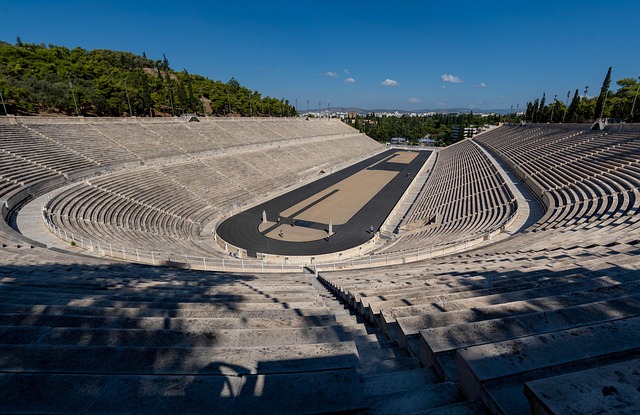
Baseball at the 2004 Athens Olympics marked one of the most competitive and internationally diverse tournaments in the sport’s Olympic era. Held at the Helliniko Olympic Complex, the competition pulled together a mix of established baseball nations, rising programs, and talent pools defined by national pride rather than major-league availability.
The 2004 tournament sits in an interesting moment in baseball history: MLB players were still not released to compete, which meant national federations leaned heavily on minor-league prospects, seasoned professionals from domestic leagues, and veterans from Japan, Korea, and Cuba’s national system. That mix created a level playing field and produced one of the most balanced Olympic baseball competitions ever staged.
Tournament Format & Competition Structure
Eight teams competed in Athens:
- Cuba
- Australia
- Japan
- Canada
- Chinese Taipei
- Greece (host)
- Italy
- Netherlands
The format followed a full round-robin (each team played all others), with the top four advancing to the medal stage. The medal round used direct elimination: semifinals → bronze medal game → gold medal game.
Teams, Rosters & Player Backgrounds
Because MLB did not pause for the Olympics, national teams relied on:
- Minor League players
- NPB (Japan), KBO (Korea), and CPBL (Taiwan) professionals
- Domestic veterans from Cuba’s National Series
- Dual-nationals and collegiate players
- Naturalized and heritage players (notably for host Greece)
Cuba arrived as the global powerhouse, fielding a roster built from its elite national program: pitchers with international experience, power hitters shaped by the Cuban domestic league, and defensive specialists used to international pressure.
Japan deployed high-level NPB professionals, giving them one of the deepest pitching staffs in the tournament. Australia constructed its roster around top minor-league talent and domestic veterans—an approach that would ultimately shock the baseball world.
How the Tournament Played Out
The round-robin phase delivered surprises immediately. Cuba performed as expected—dominant, physical, and efficient—but it was Australia who stepped out of the shadows with strong pitching, crisp defense, and a structured lineup that took advantage of every mistake. Japan remained consistent, and Canada showed flashes of breakout play.
The semifinals produced the defining moment of the tournament:
Australia upset Japan, a result that stunned most of the baseball world and set up a historic gold-medal meeting between Australia and Cuba.
In the gold medal game, Cuba reasserted its dominance, winning the championship with a combination of timely hitting, tight defense, and late-inning execution that reflected decades of international experience.
Final results:
- Gold: Cuba
- Silver: Australia
- Bronze: Japan
Why 2004 Still Matters in Global Baseball
The Athens Games are remembered for three big reasons:
- Australia’s Silver Medal Run
It remains one of the greatest underdog performances in Olympic baseball history.
Searches like “Australia baseball Olympics 2004” still spike around tournament anniversaries. - Cuba’s Last Fully Dominant Olympic Team
While Cuba remained strong in 2008, the 2004 squad is widely viewed as the peak of its sustained global dominance. - Proof of International Parity
The tournament demonstrated how competitive baseball had become globally—especially among non-MLB leagues.
The 2004 edition also helped shape future interest in the World Baseball Classic, which first launched two years later in 2006.
Long-Term Impact on the Sport
The Athens tournament influenced international baseball in several ways:
- It boosted Australian baseball, leading to increased investment and rising national-team expectations.
- It confirmed the strength of Japan, Cuba, and Chinese Taipei as consistent international powers.
- It highlighted the importance of giving international players a global stage—momentum that fed directly into WBC development.
- It provided a blueprint for how Olympic baseball could remain competitive without MLB participation.
Even though baseball would be removed after 2008 (and later reinstated in 2020), 2004 remains one of the benchmark tournaments for evaluating international parity.